Shortcuts

The mighty Zambezi River and its secrets
Great Spine of Africa Expeditions
Published in
Through its Perpetual Planet Initiative, Rolex supports the Great Spine of Africa expeditions that traverse thousands of kilometres of rivers never scientifically documented before. The research will help protect the communities and wildlife that depend on Africa’s great rivers.
All episodes
Lungwevungu River: Episode 1 – 2023
Searching for the source
Lungwevungu River: Episode 2 – 2023
Recording a river for the future
Lungwevungu River: Episode 3 – 2023
The never-ending journey


“Land at the end of the Earth”
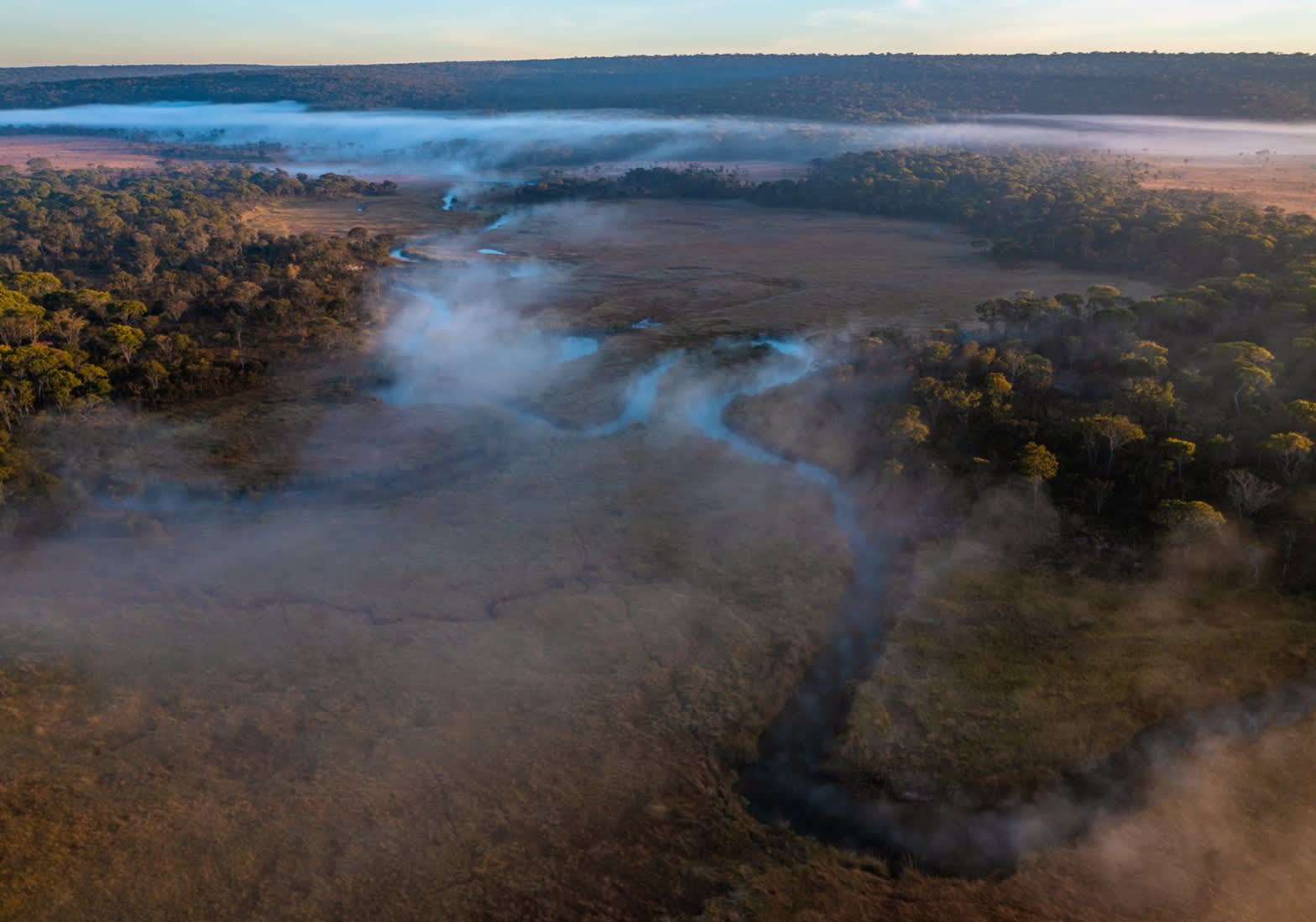
South-east of the highlands of Angola, there is a landscape of incredible beauty and true wilderness. When Portuguese colonists first arrived, they called it the “Terra do fim do Mundo” (“Land at the end of the Earth”). To some, its inaccessible peatlands, flourishing ecosystems and challenging terrains may make it seem like an apt description, but for the mighty Zambezi River, it could be the place where it all begins.

The Zambezi River is a source of life for southern Africa. Twenty million people and countless species of plants and animals found nowhere else on Earth rely on its rushing waters that touch upon Angola, Zambia, Namibia, Botswana, Zimbabwe and Mozambique. The Zambezi may be one of the world’s great rivers, but much about its journey, from its marshy origins to the salt waters of the Indian Ocean, remains unknown. Learning more about its sources and unique ecosystems will help scientists and local communities to protect these areas and the river into the future, building resilience against climate change.

This expedition, led by South African conservationist and Rolex Perpetual Planet Initiative partner Steve Boyes, starts at the Lungwevungu River. A tributary of the Zambezi, it bursts into life in the Angolan highlands, and is where Boyes believes the true source of the mighty Zambezi is to be found. “To be a source, you have to provide the most water into that river system, and you have to be the most distant source from the end of the river,” he explains.

For almost 100 years, Rolex has been championing those who push the boundaries of human endeavour to make new discoveries. For today’s explorers, there is nothing more critical than protecting the planet’s health and diversity for future generations. This is at the heart of the Great Spine of Africa series of expeditions that Boyes and a team of local experts, scientists and storytellers are undertaking. The series of expeditions will provide key information about the sources of the Zambezi, Congo, Niger and Nile rivers, on which 400 million people and two-thirds of Africa’s economy depends. Many of the tributaries they will be passing through have never been scientifically studied before.

Starting at the source
Beginning in the south-east of the Angolan highlands, Boyes and the team headed into what they call the “Okavango-Zambezi Water Tower”, which they first discovered during an expedition with the National Geographic Okavango Wilderness Project (NGOWP). This laid the foundation for continued research on the scientific importance of this water tower, which is nearly 800 km (500 miles) away from the major rivers it sustains. In this region, water towers are elevated, forested, high-rainfall areas of peatland. The peatlands act as sponges that feed the rivers, even during periods of lower rainfall. The forests and peatlands may be critical as temperatures continue to rise and weather patterns change, but they are not easy terrains to cross. “It’s almost biblical,” Boyes says. “During the day you are constantly stung, and at night beetles, flying ants and moths fill the air. It’s a very difficult place to do science, to live, to do anything. Maybe it is the Terra do fim do Mundo.”
It’s a very difficult place to do science, to live, to do anything. Maybe it is the Terra do fim do Mundo.

Traditional canoes and applied science
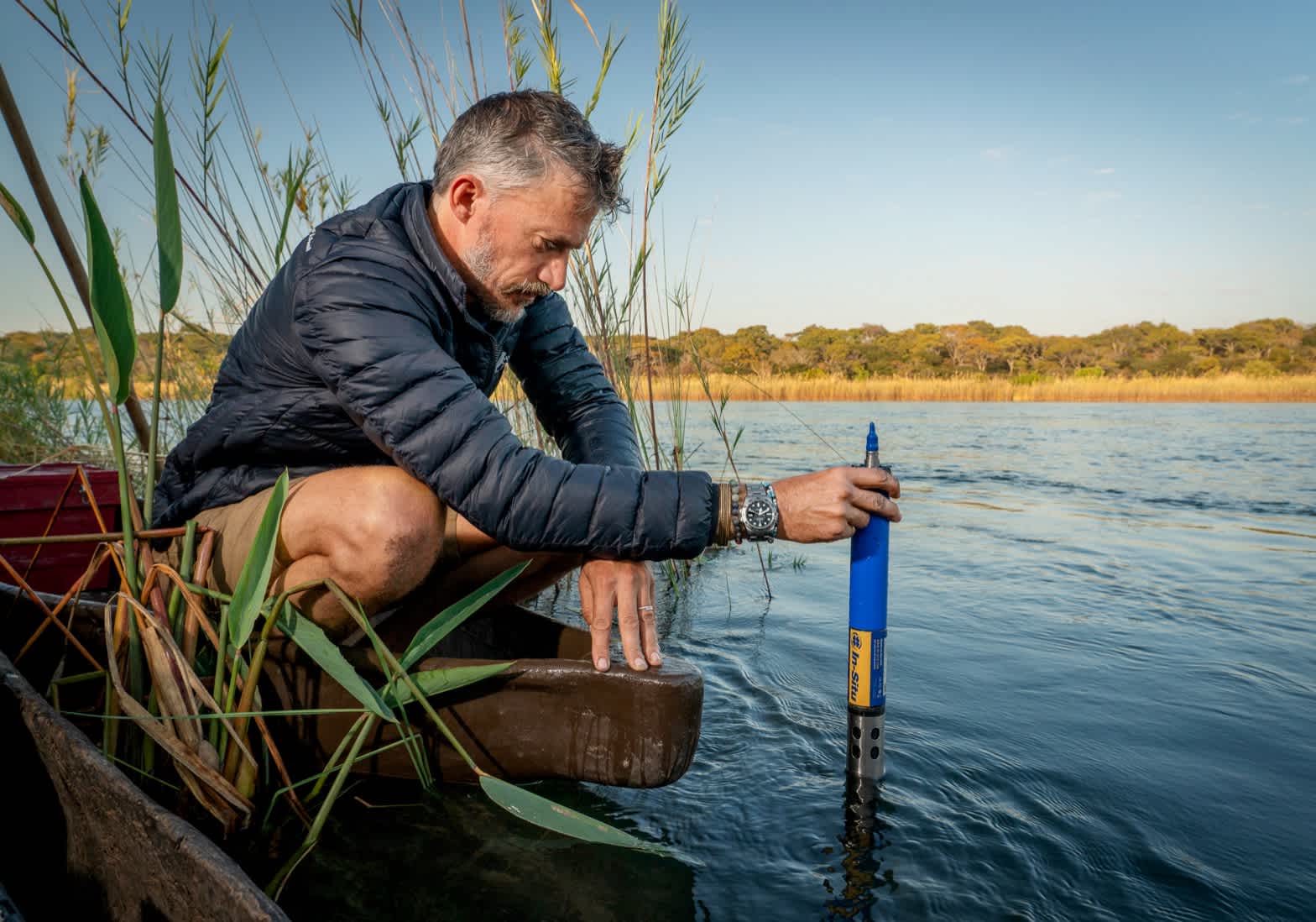
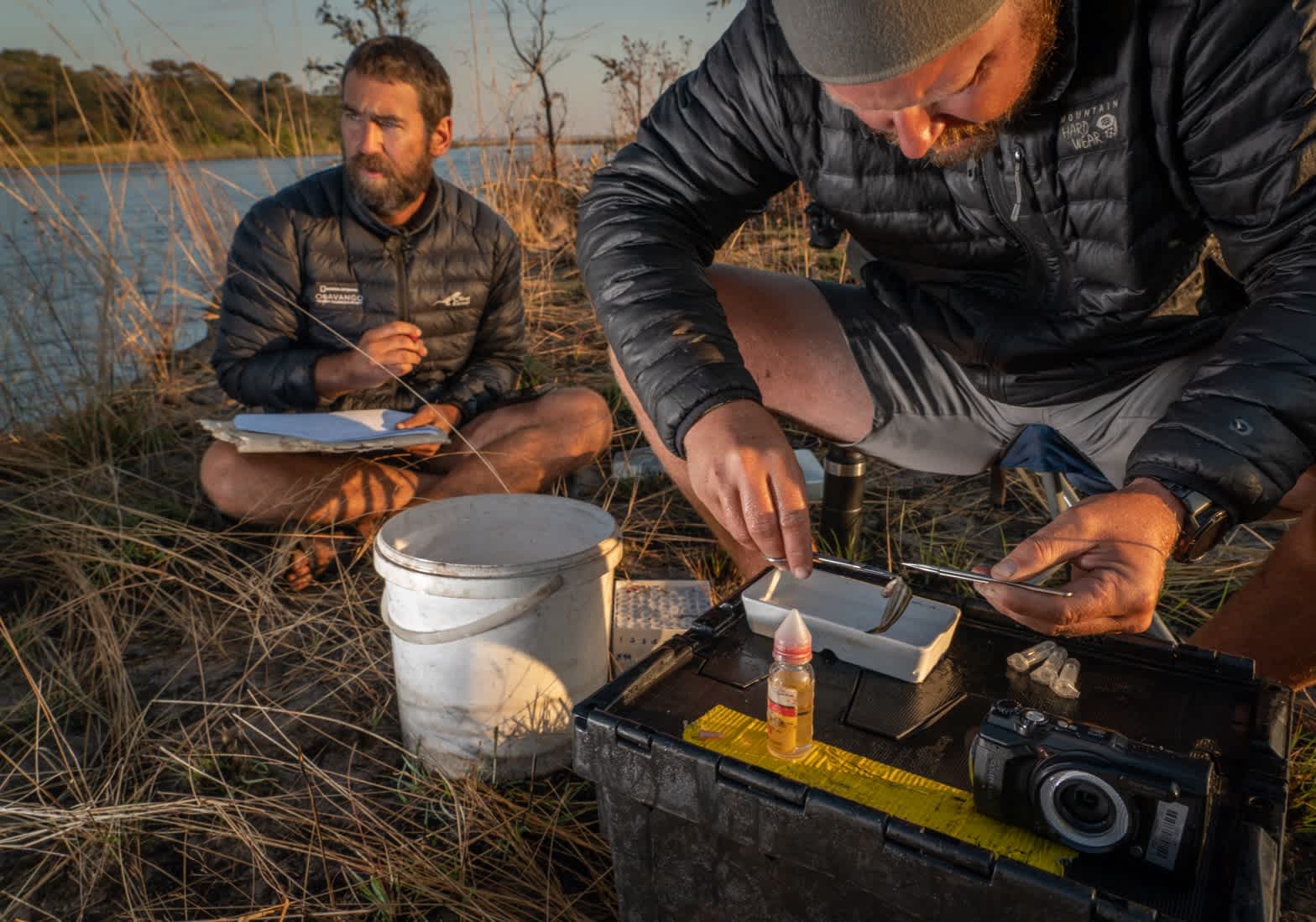
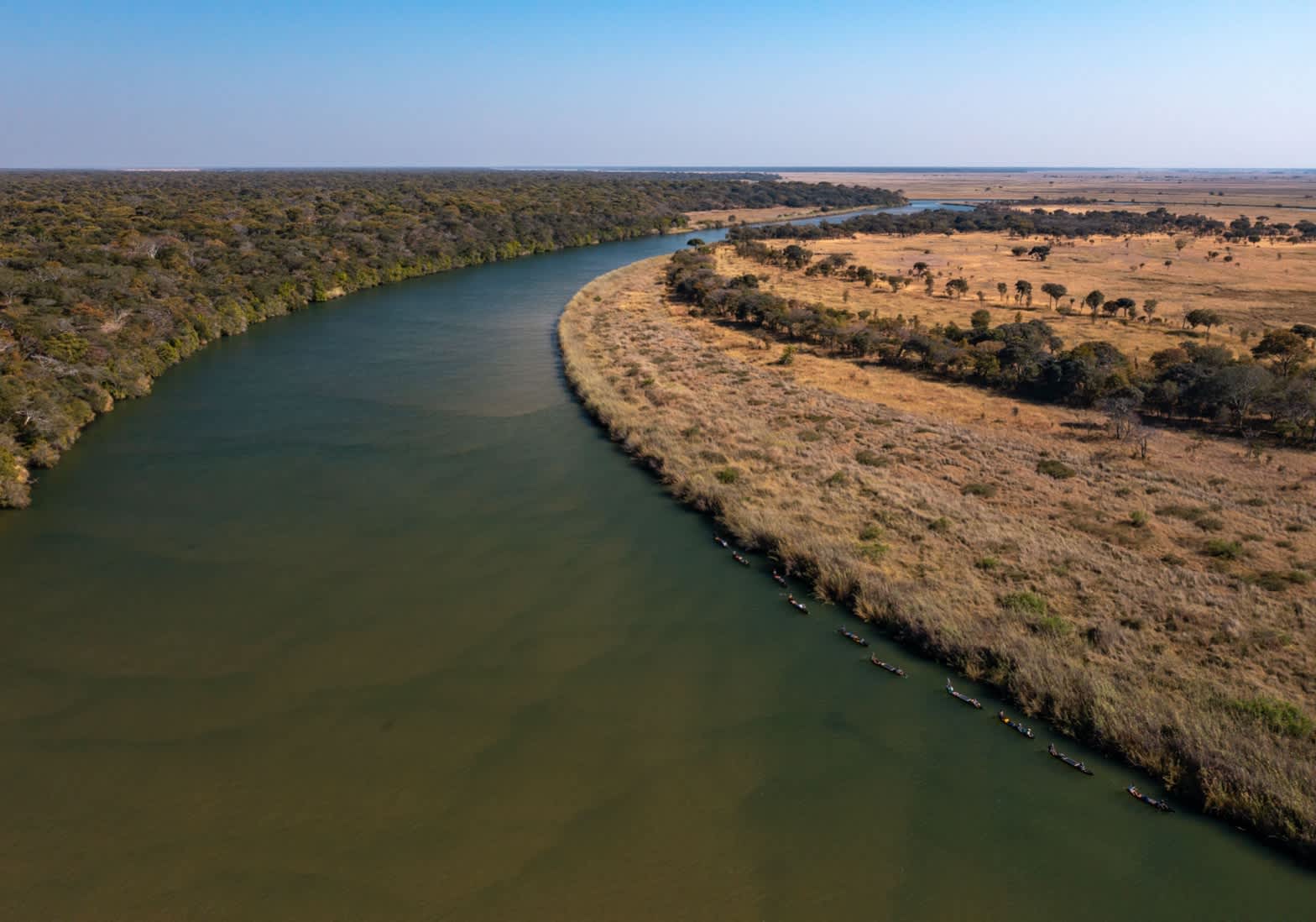
The team travelled along the Lungwevungu in traditional dugout canoes known as “mekoro”, which are commonly used in the Okavango Delta. The equipment they carried formed a crucial part of the expedition because, as Boyes puts it, “if it’s measurable, we are absolutely going to measure it.” This included counting all the wildlife and human settlements they could see along the way, sampling the water to take environmental DNA samples of any fish present and examining aquatic invertebrates. (Over a number of previous expeditions in the region, as part of the NGOWP, the team has identified more than 140 species that are completely new to science.)
They measured the structure and flow of the river and tracked water quality along the way, all while paddling the 900 km (560 miles) to its end point, where the Lungwevungu enters Zambia. In addition to continuous surveying, the team conducted detailed monitoring every 10 km using drone footage and photographs of the habitat. By collecting extensive records and data points, they hope to create a comprehensive, detailed baseline of the river’s health and ecosystems to repeat this work in five, 10 and 15 years’ time. “It is incredibly important for us to be able to measure change over time, to be able to pick up limits of acceptable change, then take those to the government and say that we need to change policy,” says Boyes.

Alongside uncovering how best to protect the rivers, team member Kerllen Costa, an Angolan biologist and environmental anthropologist, emphasizes another important goal: “Apart from doing all the science, apart from recording everything, this expedition is also a way for us to better understand the communities because, if we understand the communities, then we understand their relationship with the environment.” Gaining perspective on both of these ecological relationships will provide a fuller picture of how people contribute to their local ecosystems.
Apart from doing all the science, apart from recording everything, this expedition is also a way for us to better understand the communities because, if we understand the communities, then we understand their relationship with the environment.
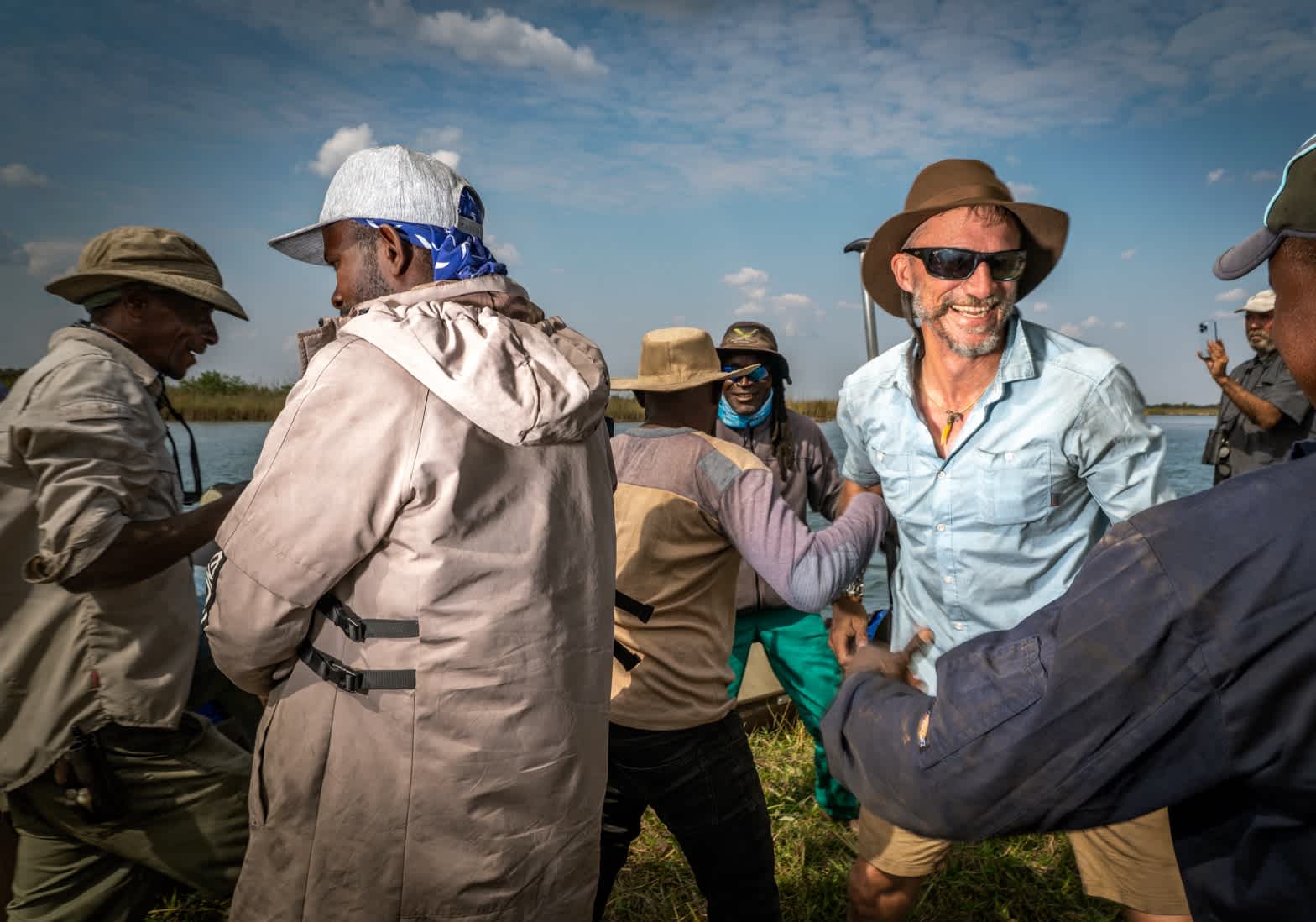
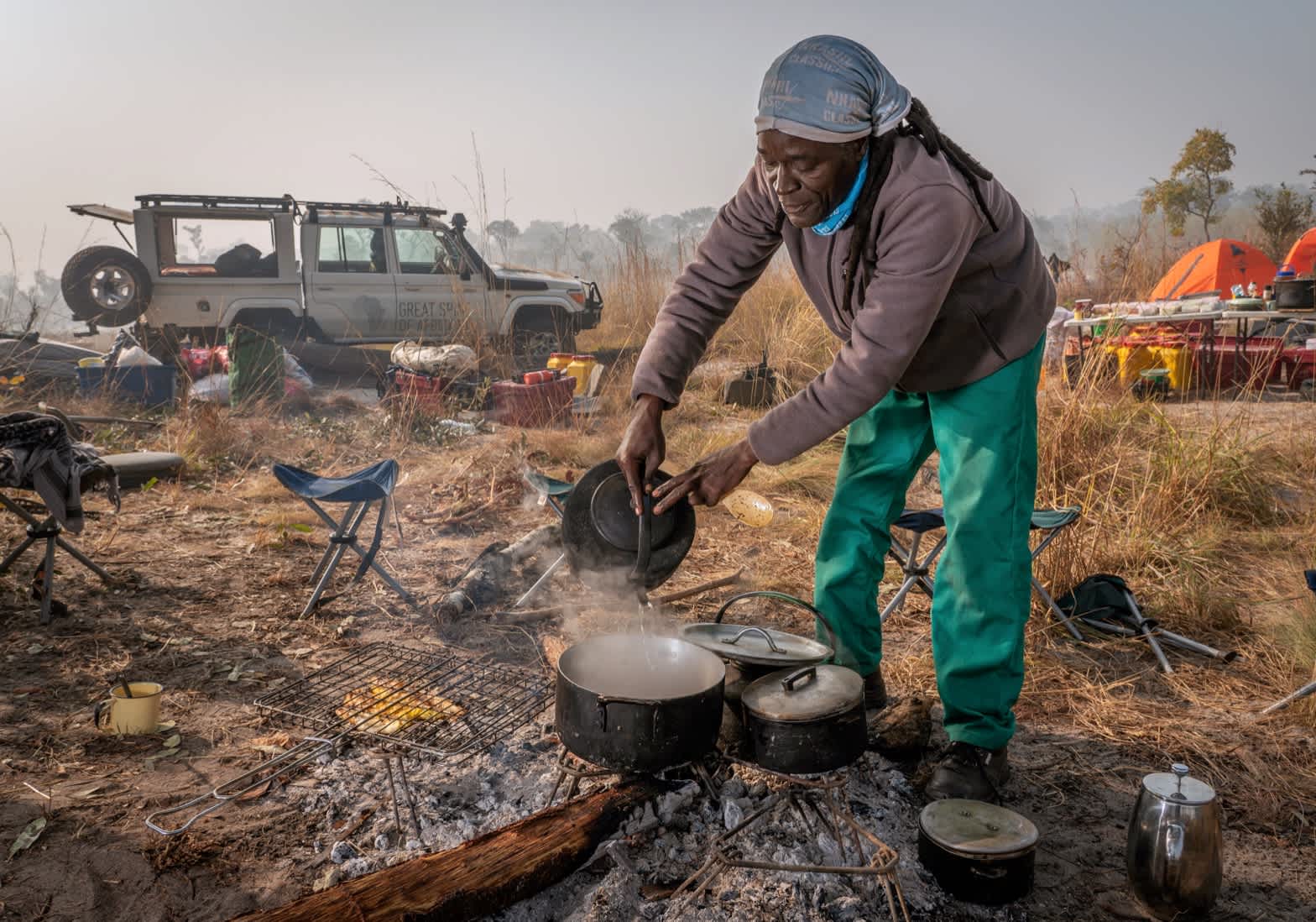
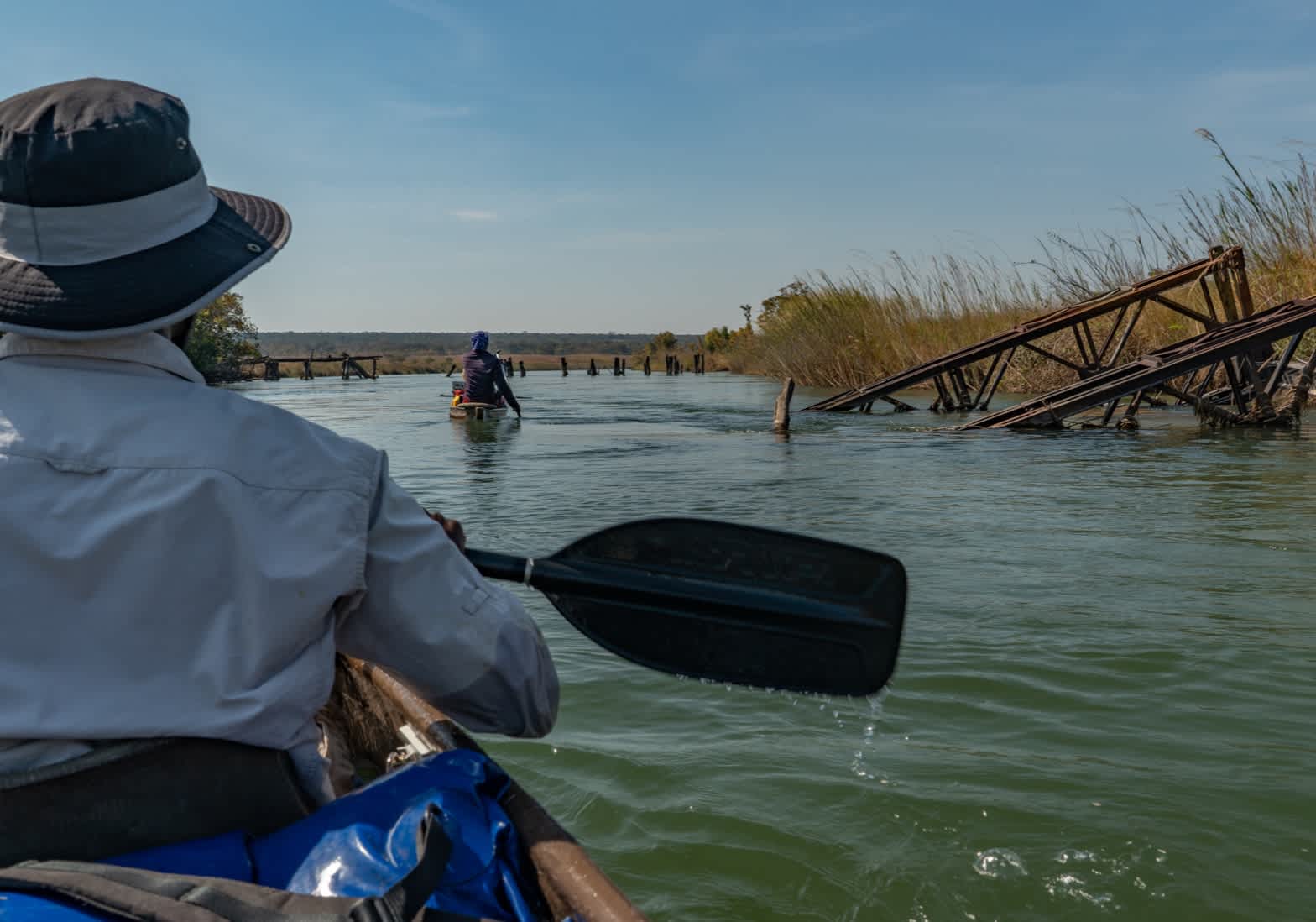
“There’s a generation of work still to be done on these rivers, establishing baselines, so that we can protect them properly,” Boyes says. These expeditions will empower and inspire people to strengthen their protection of these pristine wildernesses, for generations to come.