Shortcuts

The mysteries of the Colombian Amazon
Published in
With the support of the Perpetual Planet Initiative, an expedition led by Rolex Awards for Enterprise Laureate Francesco Sauro to unexplored caves deep in the Colombian Amazon has yielded remarkable discoveries and helped forge profound cross-cultural bonds.
Forgotten chambers
The Guiana Shield is a vast granite-quartzite formation covering north-east South America. This area of tropical rainforest, mountains, canyons and waterfalls is one of the least-explored places in the Amazon, but among its most biodiverse. For speleologist Francesco Sauro, a 2014 Rolex Awards for Enterprise Laureate, the real fascination does not lie with the region’s abundant flora and fauna, but with what lies below.
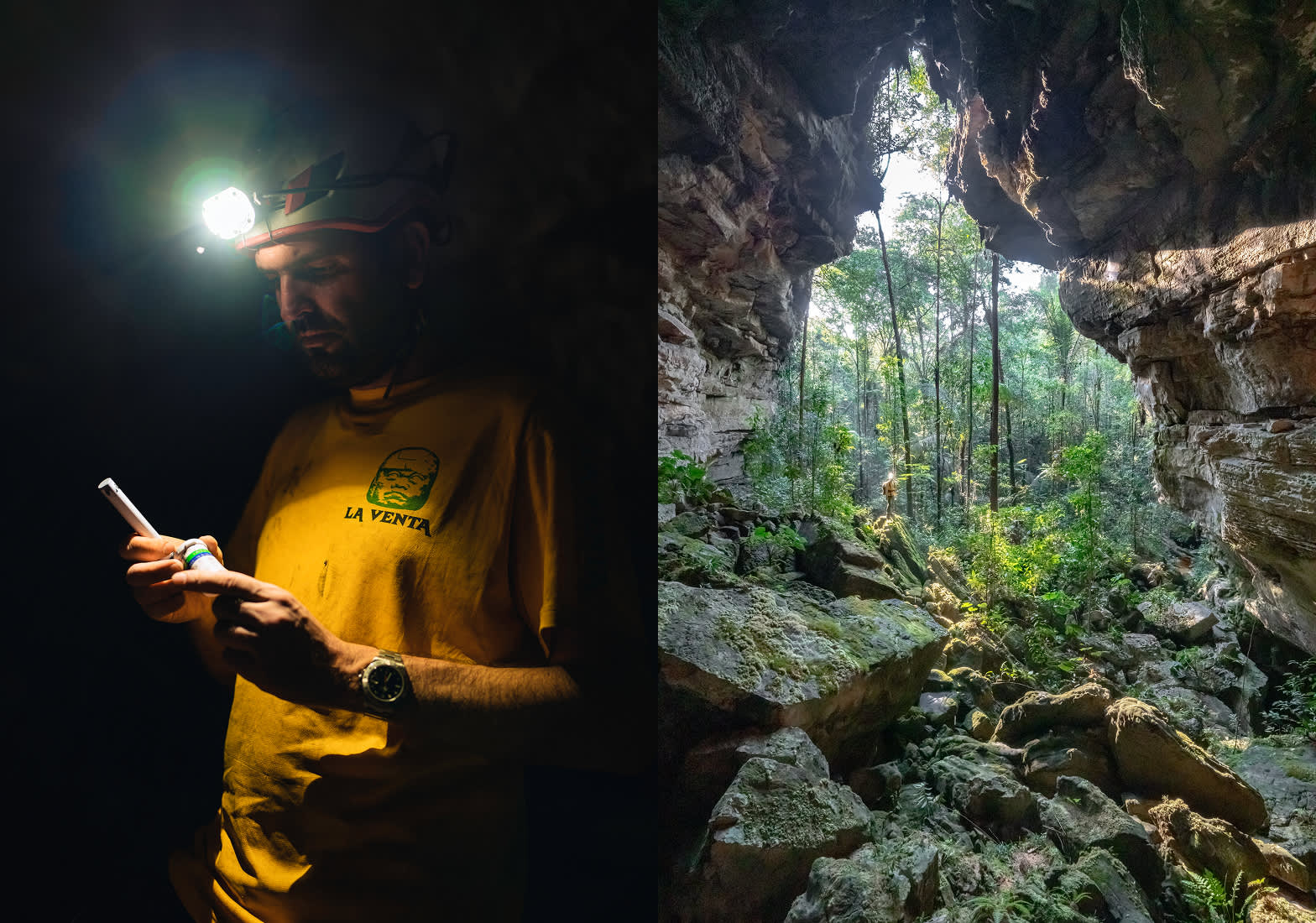
Together with a team of scientists and members of the Monochoa community, Sauro recently embarked on a unique expedition to the unexplored caves in Colombia’s Monochoa Indigenous Reserve. Before they were able to investigate the caves, they first had to locate them, a process that depended entirely on the ancient knowledge of the team’s Indigenous members.

The expedition, first conceptualized by Sauro with fellow speleologist Dan Straley, involved negotiating the Yarí River’s white-water rapids on boats built by the Monochoa, and trekking for days through dense vegetation. “The forest is hard,” says Sauro. “The animals, the insects, the heat, the humidity, the dangers, the weather, the rain – everything gets wet and never dries. The insects, the wasps, every kind of ant – they can reach everything, on you, on your bag, in your hammock, everywhere.”
But the onerousness of the journey was quickly forgotten upon reaching the caves. Sauro’s own excitement was intensified by witnessing his Monochoan teammates visiting the sacred chambers for the first time. “The emotion of seeing the Indigenous people exploring the caves ahead of us, and to see their eyes – it was just amazing. Every problem that we had to overcome and every bit of discomfort was just overwhelmed by the emotion.”

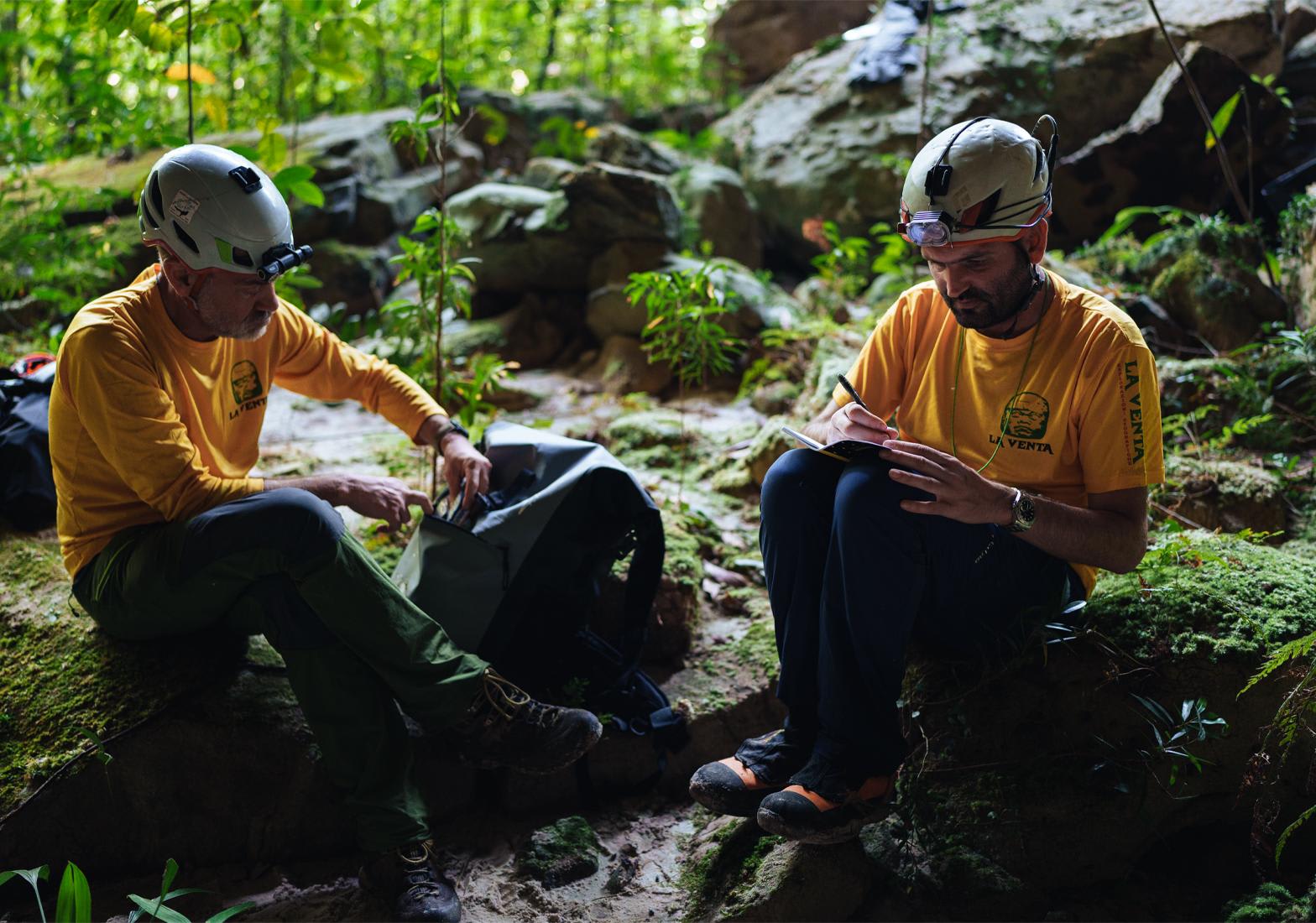
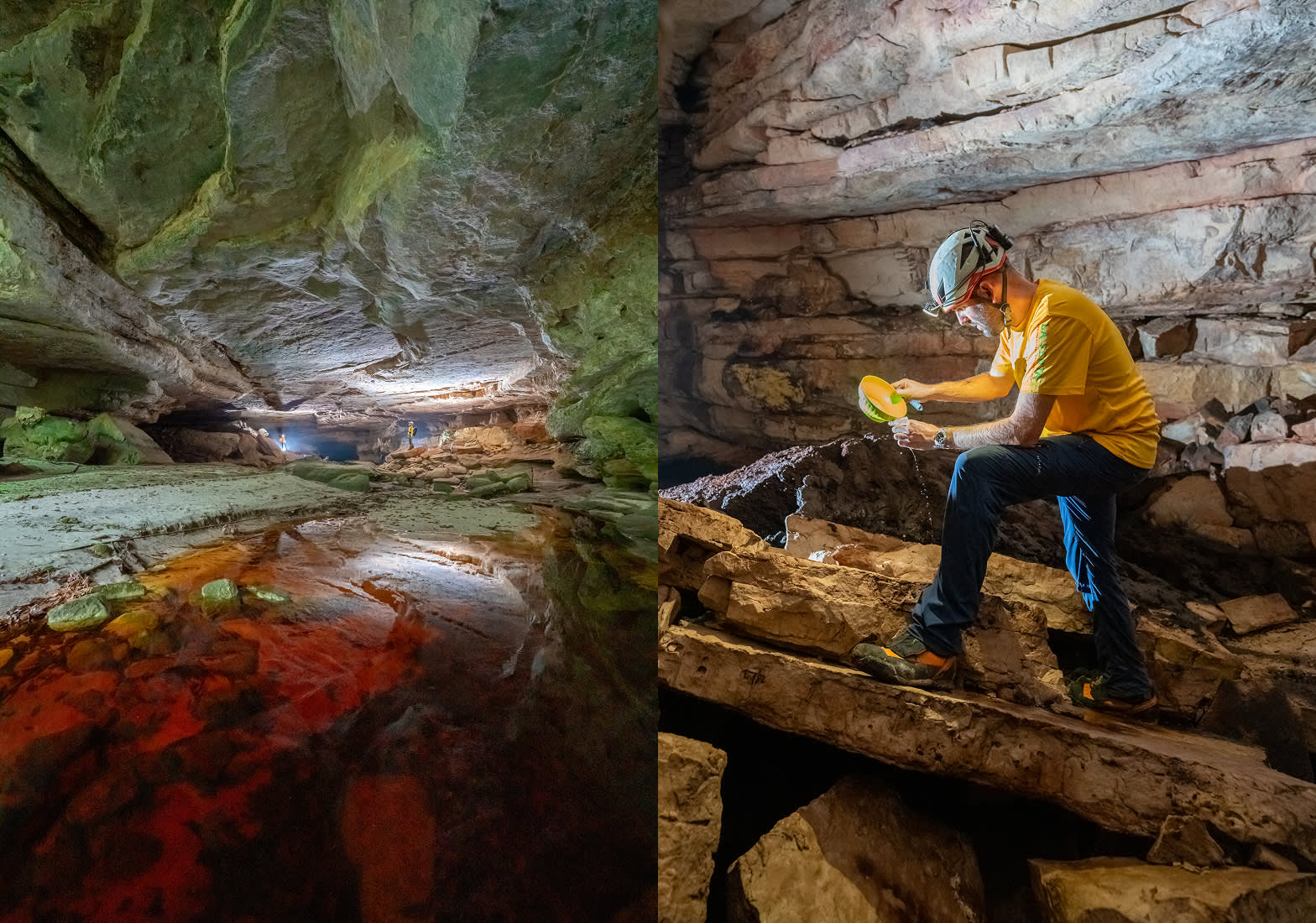
Once the excitement had calmed, the team got to work, digitally mapping, photographing and ageing the caves. Carlos Lasso, of Bogota’s Instituto Humboldt, was charged with making an inventory of the caves’ subterranean fauna, including fish, shrimps, spiders, insects and bats.
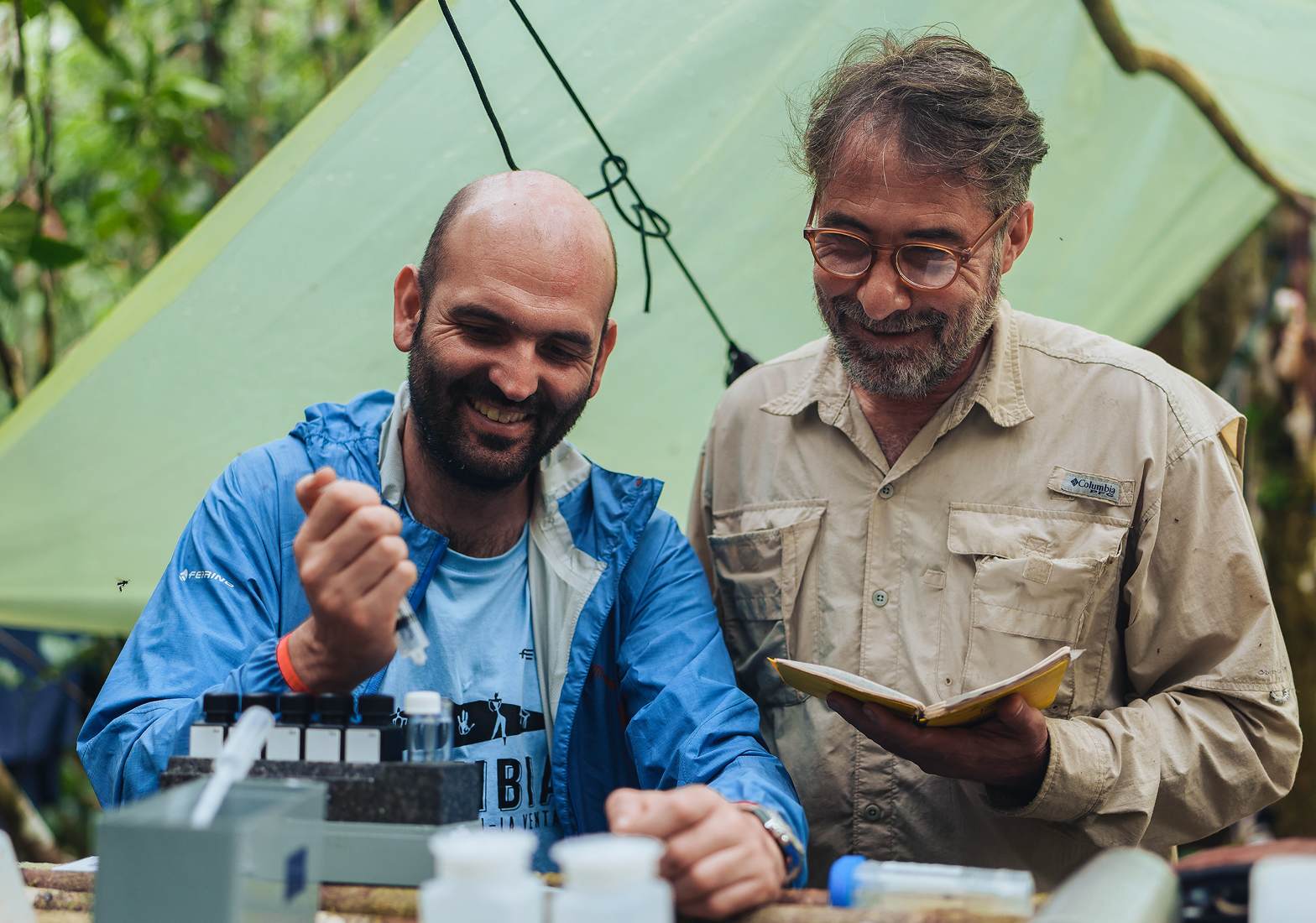
Samples were sent to specialists in Colombia and around the world, with the expectation that many species will be new to science. According to expedition team member Salvador Andoque, this data will be crucial to people in the region. “It’s important to find out what’s out there and what we have in our region, so that we can protect it.”

A subterranean paradox
Beyond the inspiring possibilities of Lasso’s research, the caves also contained stromatolites – living rocks created by bacteria that are usually found in the oceans, and which have previously been documented in caves in Brazil and Venezuela. Paradoxically, this subterranean discovery allows for speculation about the possibility of life far above planet Earth.
The presence of these stromatolites indicates bacteria thriving in the darkness which, according to Sauro, has profound implications for the possibility of life on other planets. “Underground, without light, in a very quiet environment over very long geological times, with very low nutrients – those are exactly the conditions we would expect to find on the subsurface of Mars,” he explains.
Underground, without light, in a very quiet environment over very long geological times, with very low nutrients – those are exactly the conditions we would expect to find on the subsurface of Mars.

And still the caves were not done yielding their remarkable secrets. Until now, received wisdom suggested that the mountains of the Monochoa region were formed around 500 million years ago. But, to his astonishment, Sauro discovered evidence suggesting otherwise. The caves were found in rock iron layered between the quartz – a feature typical of much more ancient times. “When we saw it, we thought ‘wow’! It was not expected. So now, there is a question mark about the real age of these rocks. They could be much older than previous studies suggested.”
A framework for the future
The nature of science is such that the true implications of these discoveries may take time to fully emerge. But for Sauro, the expedition can already be labelled a success, thanks to the fruitful teamwork and strengthening bonds that were forged between the scientific personnel and the Indigenous population.
“The original objective was to share knowledge, share experience, share different cultural perspectives and learn from each other. That is the most important success for me,” he says. This shared knowledge and experience was not just crucial to the success of the expedition, it is also vital for the ecological future of a region experiencing threats such as climate change and deforestation. “When you go to a place, the people that will be able to continue on the path of exploration, knowledge and protection, are those living there.”

Sauro believes the expedition will help the Indigenous community in its efforts to protect the forest. The presence of endemic species, and the discovery of unique formations of minerals, mean the area has huge cultural heritage value. By marrying this scientific approach with the Monochoa community’s own ancient relationship with the forest and its flora and fauna, they will be able to preserve it for future generations. “In joining together these two perspectives, the scientific and the local, cultural perspectives, they can protect their area very strictly, so that nobody can interfere with this ecosystem,” says Sauro.
In joining together these two perspectives, the scientific and the local, cultural perspectives, they can protect their area very strictly, so that nobody can interfere with this ecosystem.
Such has been the success of the expedition that he believes these remote subterranean treasure troves will be among the most important areas of research in South America within the next 10 or 20 years. But just as important as the scientific discoveries is the sense of adventure and exploration that such journeys inspire. The sense of wonder shared by the expedition’s members imbues him with optimism. “We need to rediscover the small piece of us that contains the DNA of an explorer, the drive to discover something new and remain astonished by nature. If we can all still feel these sensations, we will respect this planet and we will be able to live in better equilibrium with the world around us.”