
We’re putting weather stations out in these hard-to-reach places because we need to understand what the current climate is like to have a better understanding of what the impact of climate change will be.

National Geographic Society
Published in
With support from the Rolex Perpetual Planet Initiative and National Geographic Society, Explorers Baker Perry and Tom Matthews scaled one of the highest peaks in the Andes to collect a missing piece of critical data on the impact of climate change on the Amazon.

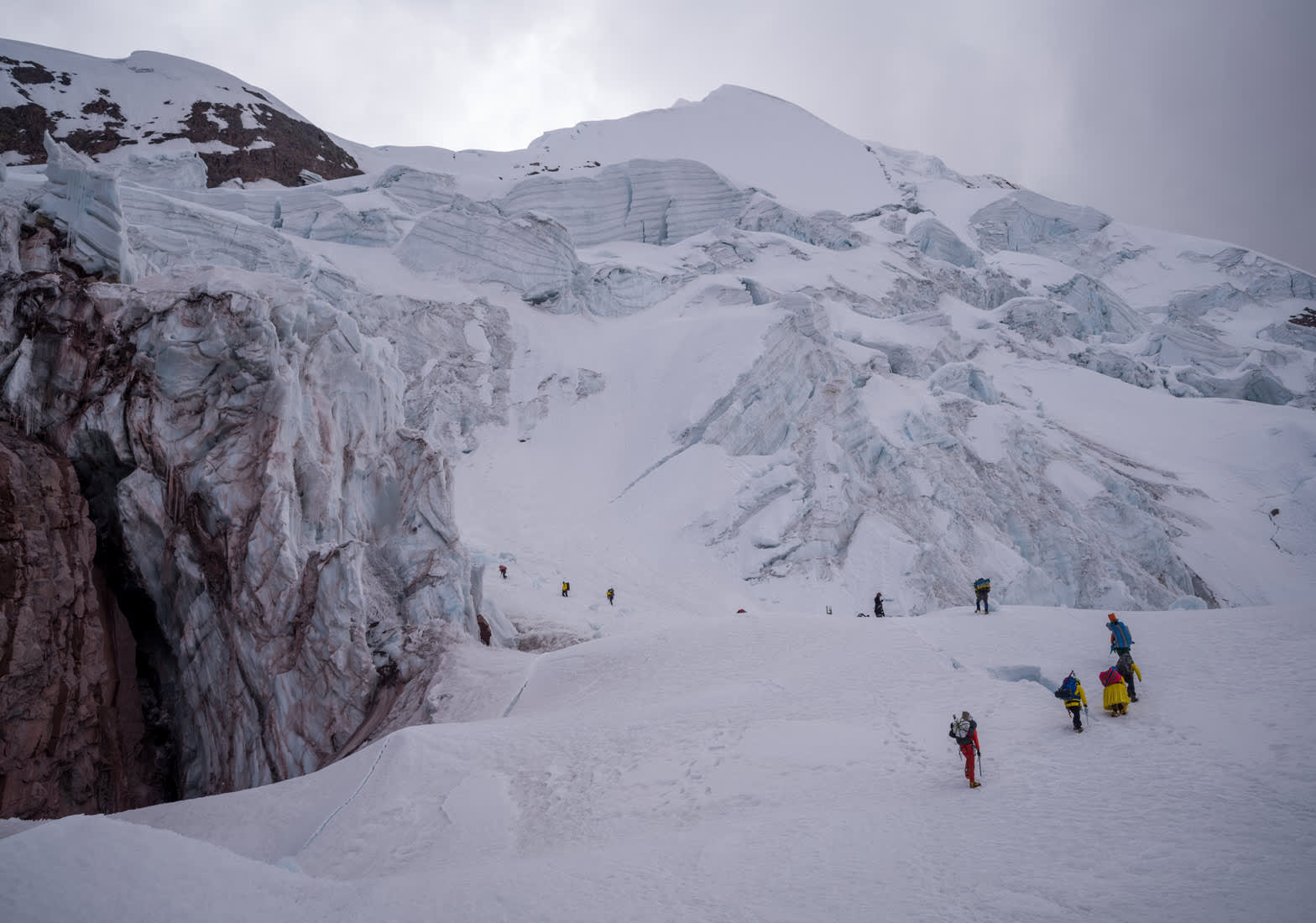
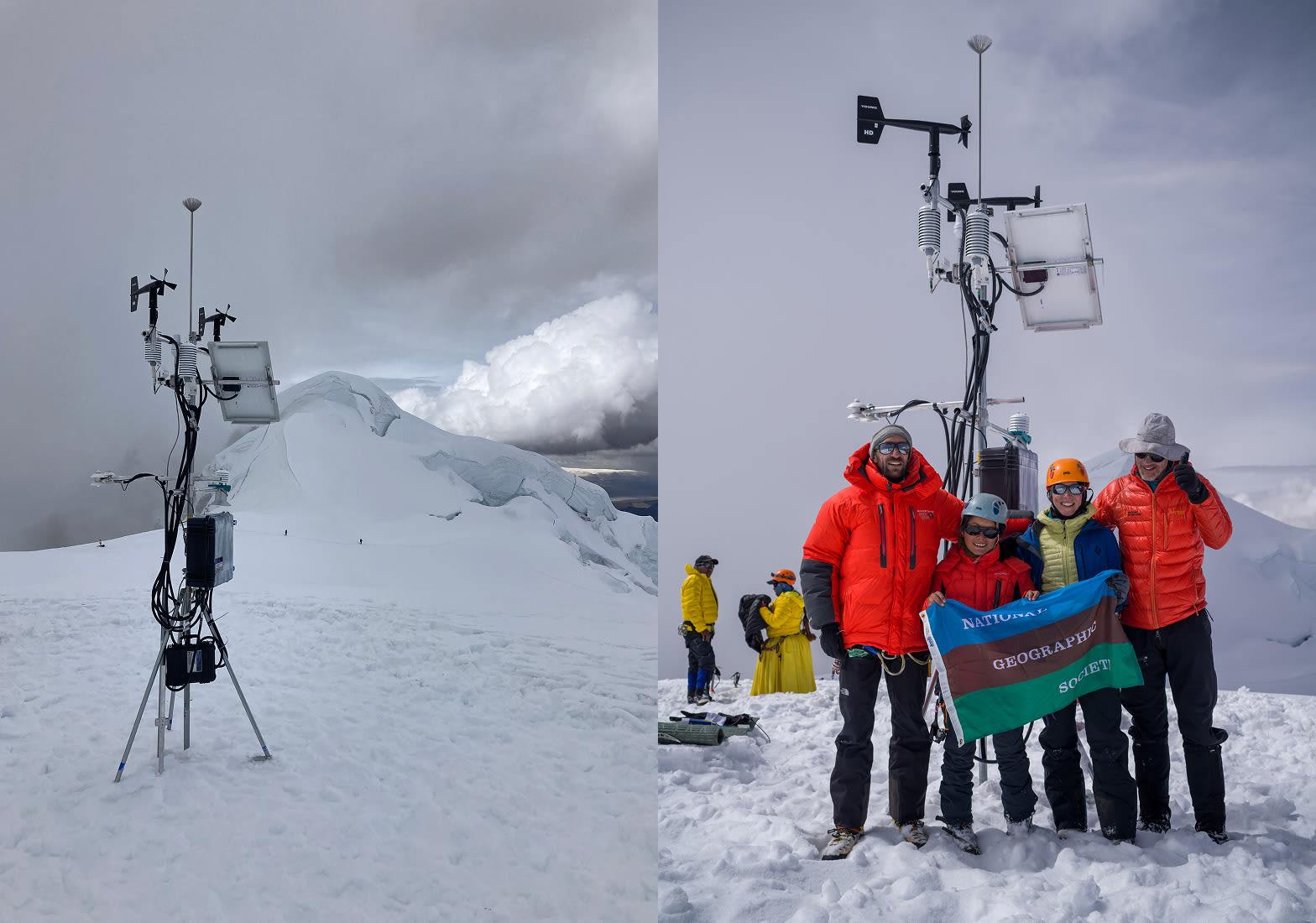
With their legs braced firmly on the dense snowpack, climate scientists and National Geographic Explorers Baker Perry and Tom Matthews steady themselves against the wind while a Peruvian meteorologist balances precariously on their shoulders, adding the final adjustments to a newly installed state-of-the-art weather station. The team has to work quickly. They are at an altitude of nearly 6,350 metres on the summit of Nevado Ausangate, a towering peak in the Peruvian Andes, and the hard work in limited oxygen is rapidly sapping their energy.
Establishing weather stations on the world’s high mountains is a daunting task that requires skill, courage and dedication. Consequently, few exist, and we still know alarmingly little about these critically important environments.

For almost a century, Rolex has supported explorers who overcome just such obstacles in the quest to expand human knowledge. The company has now moved from championing exploration for the sake of discovery to protecting the planet through the Perpetual Planet Initiative that was established in 2019.
The multi-year Rolex and National Geographic Perpetual Planet Amazon Expedition is helping teams of researchers to access some of the most remote corners of the vast Amazon River basin, from its steamy lowland jungles to its source waters in the Andes.
As climate change intensifies, disrupting weather patterns around the world, the fate of glaciers in high mountains looks increasingly uncertain. These “natural water towers” act as a water source for an estimated 1.9 billion people and shape weather conditions far beyond their immediate area. Planning for how they will be affected by a warming climate and other environmental changes is crucial, yet until scientists understand more about them, reliable projections remain elusive.
We’re putting weather stations out in these hard-to-reach places because we need to understand what the current climate is like to have a better understanding of what the impact of climate change will be.
Perry and Matthews are on a mission to fill those vital knowledge gaps, and the threat of avalanches and snowstorms is not going to stop them.
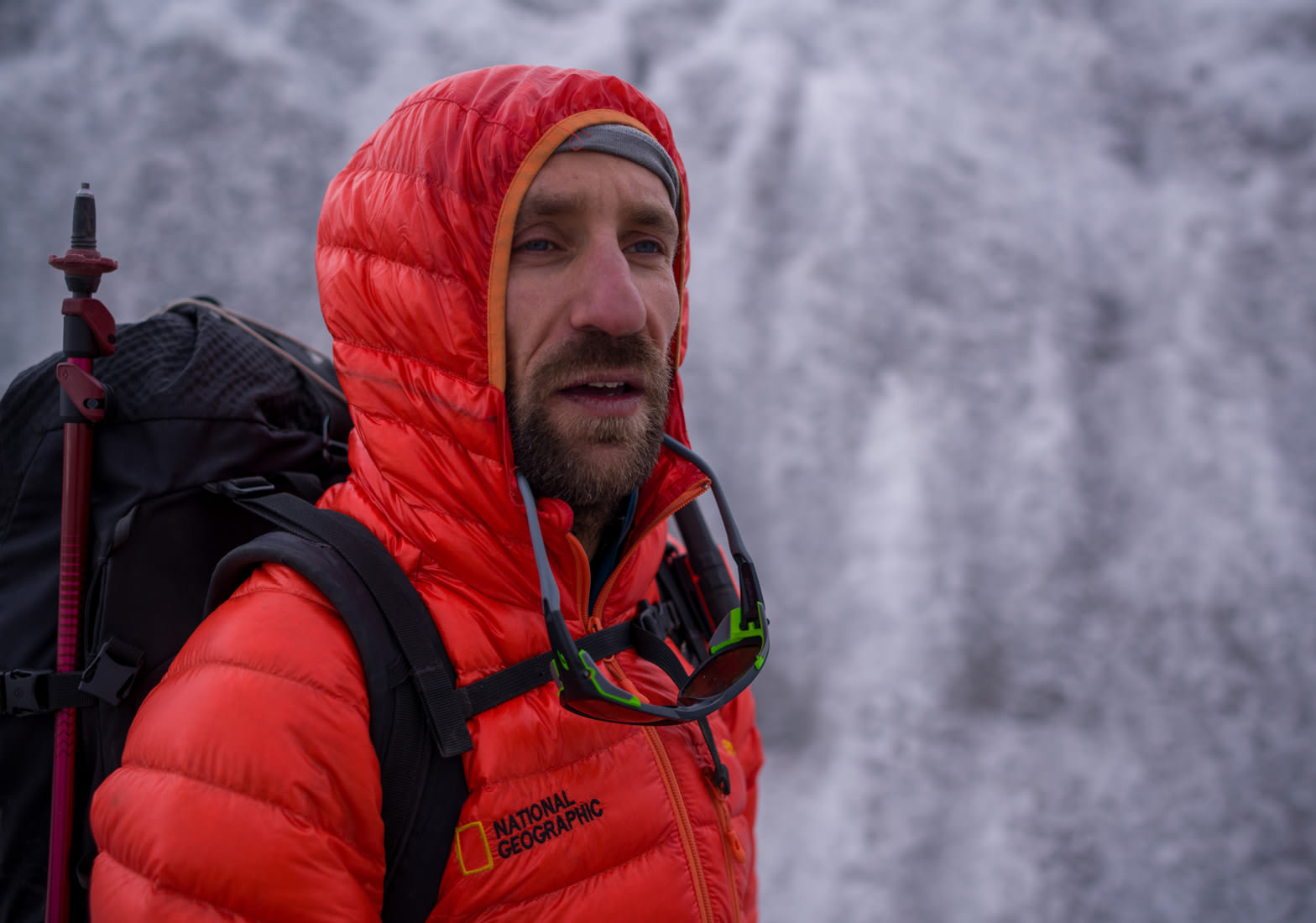
“We have very, very few measurements in the high mountains when it comes to the weather, so anything is useful,” says Matthews, who first collaborated with Perry in 2019 when they installed the world’s highest weather station at the time on Mt Everest and again when the Explorers joined forces and broke their own record to install an even higher weather station on Mt Everest in 2022. “We’re putting weather stations out in these hard-to-reach places because we need to understand what the current climate is like to have a better understanding of what the impact of climate change will be.”
Perry, who spent some of his childhood years living in the tropical Andes, is also acutely aware of the key role of the mountains and their precious water supply.
“As a child living in both Bolivia and Peru, I really came to appreciate the importance of the snow and the ice found on the high mountains,” he explains. “Not only does it sustain agricultural crops and livestock, but it also provides critical potable water for communities.”
Much of the water that runs off Ausangate flows northwards into the Amazon River basin. Evaporation from the Amazon rainforest then drifts back westwards to fuel the precipitation that sustains the mountain’s glaciers and snowpack in a complex cycle, which is acutely vulnerable to the combined threats of climate change and deforestation.

The expedition allowed us to bring together this incredible team of indigenous Aymara and Quechua guides, scientists, porters and support staff…
Perry’s childhood experiences in the Andes also gave him a deep appreciation for the region’s history and culture, something that made the Ausangate expedition especially rewarding.
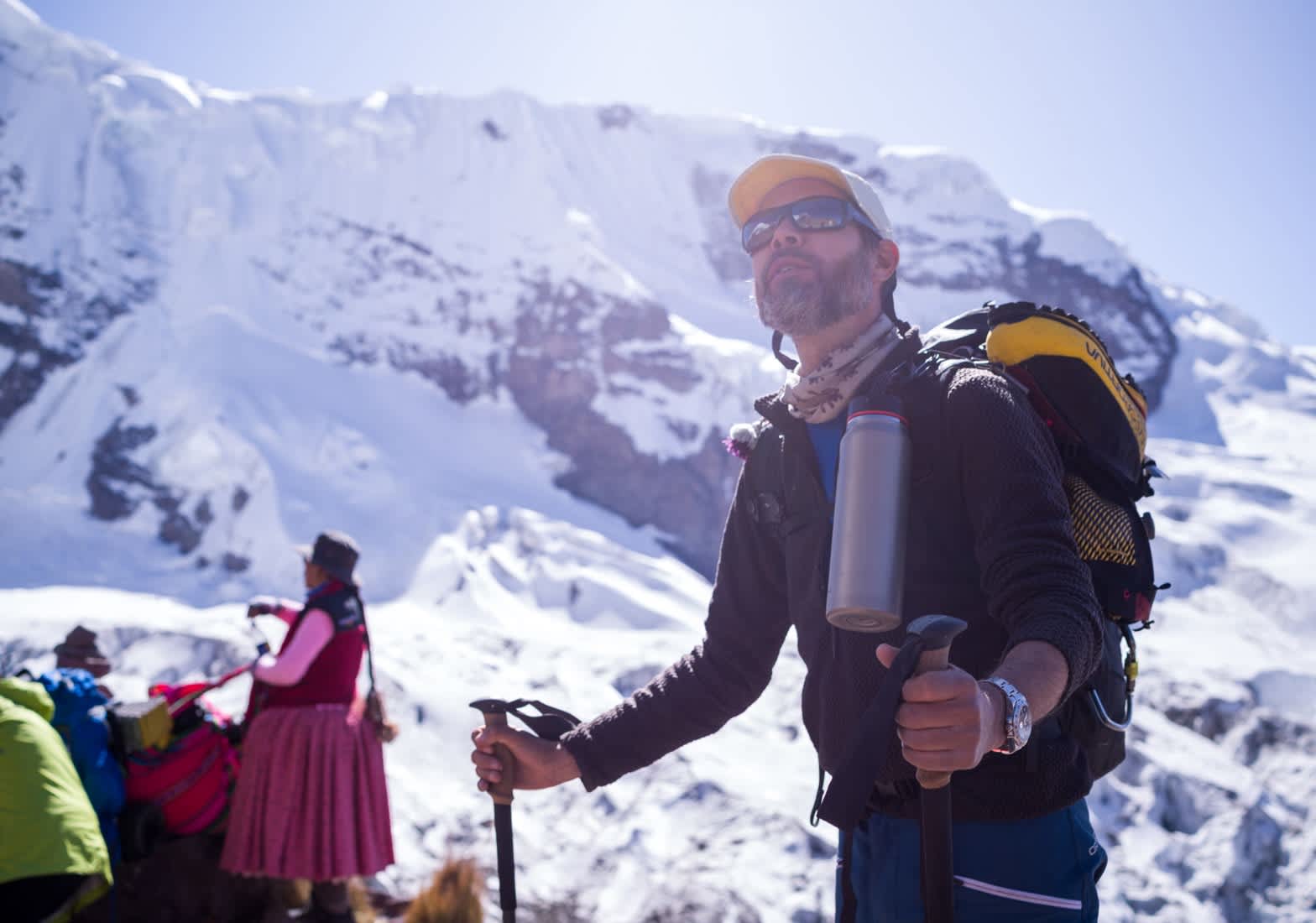
“The expedition allowed us to bring together this incredible team of indigenous Aymara and Quechua guides, scientists, porters and support staff… and it ended up being just a tremendous celebration of the Andean communities and Andean culture.”

Among the team was a trailblazing group of female Bolivian mountaineers known as the Cholitas Escaladoras who have become famous around the world for their ability not only to scale technically challenging mountains, but to do so clad only in their traditional Aymara attire. Perry describes their contribution as “critical”, both in terms of the work they carried out as guides and the positive energy they brought to the expedition.
He reveals how, after a particularly strenuous night-time ascent of a near-vertical ice wall, amid howling winds and sub-zero temperatures, the Cholitas were able to boost the team’s spirits: “They had these huge smiles – they broke out in an Aymara song and started an impromptu dance, so we were able to just have a really fun moment.”

Upon reaching Ausangate’s summit, the group faced further challenges. In order to fix the weather station’s mast firmly enough to withstand the fierce weather conditions it will likely face, the expedition’s members had to dig a massive pit deep into the snow. They worked in shifts, their strength quickly sapped by the low levels of oxygen. “It was a colossal undertaking. We moved tonnes and tonnes of snow,” Matthews recalls.
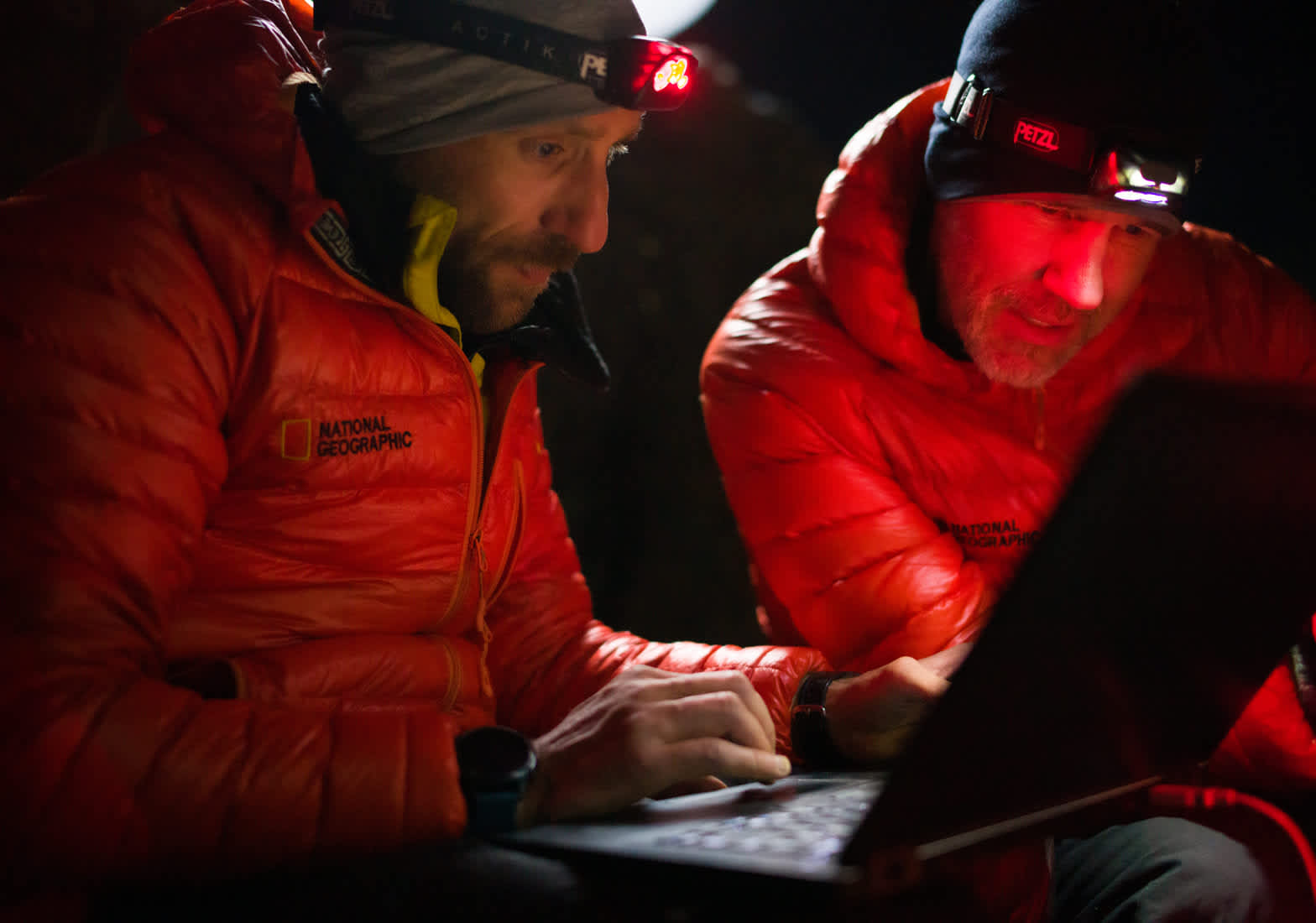
After the equipment was finally in place, a tense wait ensued until they could confirm that the station was successfully transmitting data. At the same time, other members of the team collected snow samples to test for isotopes and microplastics. Eventually, with a storm threatening to break at any moment, the transmission began and the team set off on its long descent.

The station is set up to record everything from air temperature and wind speed to humidity and solar radiation. It will help inform predictions of snow and ice loss in the years to come, as well as shed light on the dynamic water cycle of the greater Amazon basin.
“It’s incredibly exciting, and surreal actually, to scale these remote mountain peaks and witness the changes in real time,” says Matthews. “But really what drives all of us is the desire to preserve and protect these resources.”