Shortcuts

Through the tributaries
National Geographic Society
Published in
Fernando Trujillo and María Jimena Valderrama are captivated by the charismatic dolphins swimming throughout the Amazon River basin. With support from the Rolex Perpetual Planet Initiative and the National Geographic Society, their latest international study, an assessment of the dolphin’s health and its habitat, has yielded encouraging results.

Ambassadors of the river
National Geographic Explorers Fernando Trujillo and María Jimena Valderrama have spent the last year studying the Amazon’s river dolphins as they made their way along the tributaries that flow through Brazil, Colombia, Ecuador and Peru. Understanding more about dolphin populations, movement and health is revealing more about the Amazon’s waterways and fish species and how they impact the millions of people that depend on them. Their work forms a key part of the Rolex and National Geographic Perpetual Planet Amazon Expedition: exploring the intricate and intertwined ecosystem functions that keep the world’s largest freshwater basin alive.

There are two species of dolphin in the Amazon, the tucuxi, or grey dolphin, and the pink river dolphin – or boto – the largest river dolphin in the world. Their distinctive look and curious personalities have made the pink dolphins one of the most conspicuous aquatic species in the Amazon. Trujillo, a marine biologist, sees them as ambassadors of the river. People who encounter them are very empathetic with dolphins. Despite this, river dolphins are now threatened by fishermen, vessel traffic, pollution and infrastructure projects such as dams.

By studying the dolphins and the threats they face, Trujillo and Valderrama, an aquatic wildlife veterinarian, have found they can glean insight into the wider river ecosystem. “The dolphins are like sentinels of the river,” Valderrama says. Because of their lengthy migration and long lives, the dolphins give an indication of what is happening throughout the Amazon’s food web, including the fish that nearby communities depend on for sustenance. As Trujillo points out, “Everything is connected in the Amazon.”
A major concern for Trujillo and Valderrama is mercury pollution from gold mining, which builds as it moves up the food chain from plants to fish and into mammals like dolphins and even humans, where it can reach lethal levels. Deforestation in the Amazon is also contributing to the problem, as naturally occurring mercury in soil that was once held in place by tree roots is washed into the rivers.

Fundación Omacha
Trujillo has dedicated his life’s work to researching the river dolphins, teaming up with local communities to bring together indigenous and scientific knowledge and develop solutions for everyone. The indigenous Tikuna people began calling him Omacha, a dolphin who became human. “They felt that I had transformed myself into a human to protect the dolphins. That was such an honour,” says Trujillo. It demonstrates his extraordinary and long-standing relationship with the river dolphins and became the name of his foundation, Fundación Omacha, which creates strategies for the proper use of the river’s resources while supporting local communities.
In this latest study, as part of the Rolex and National Geographic Perpetual Planet Amazon Expedition, Trujillo and the Fundación Omacha team followed Amazon tributaries through seven rivers and across four countries, counting the dolphins as they went. They captured nine dolphins, collected blood samples to monitor their mercury levels and fitted six of them with satellite trackers. With Valderrama’s veterinary expertise, the team was able to do this in the least stressful way possible. “I perform a physical examination and make sure everything is fine,” Valderrama says of capturing the dolphins. “The safety of the animals is the most important thing for us.”
They felt that I had transformed myself into a human to protect the dolphins. That was such an honour.
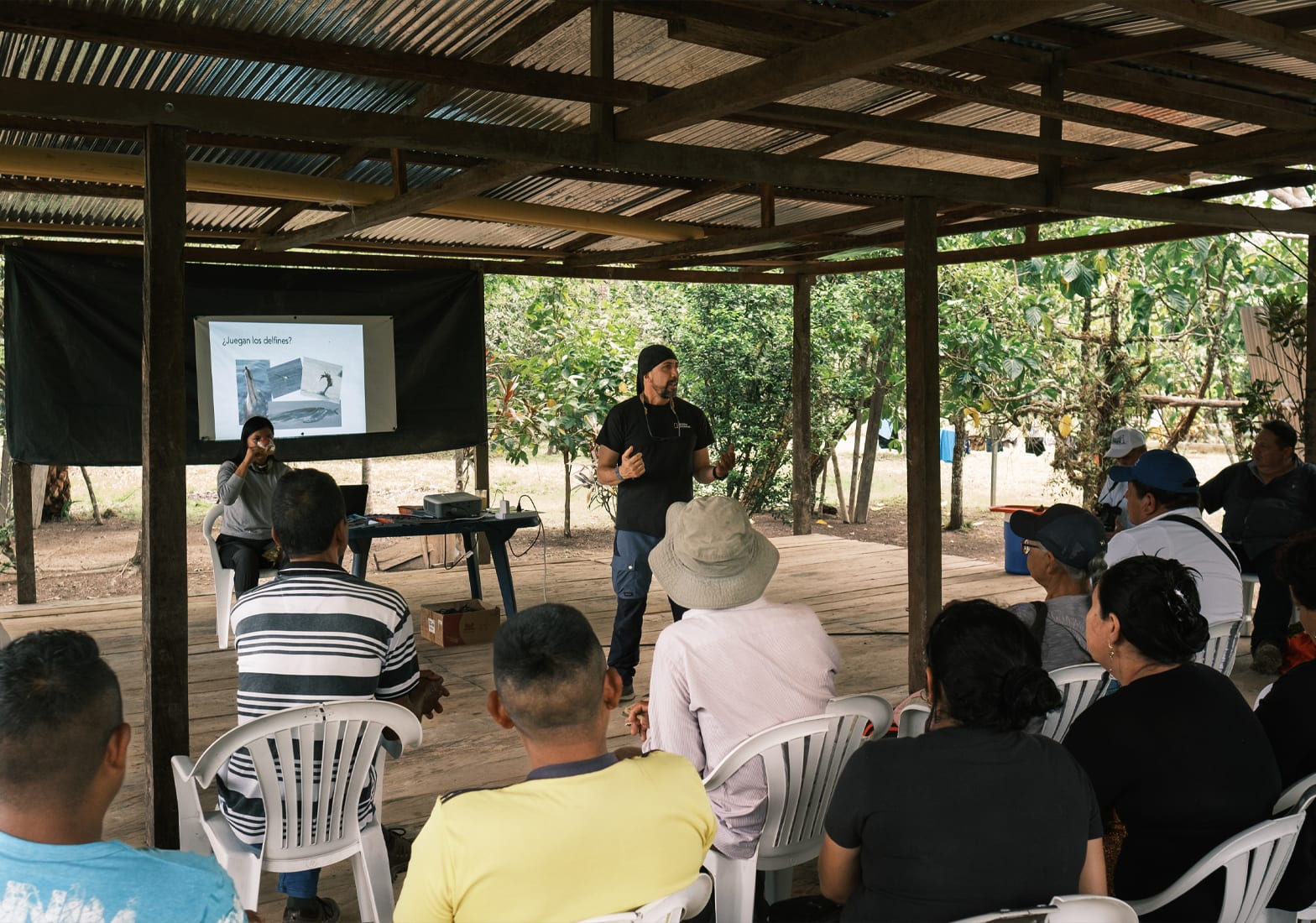
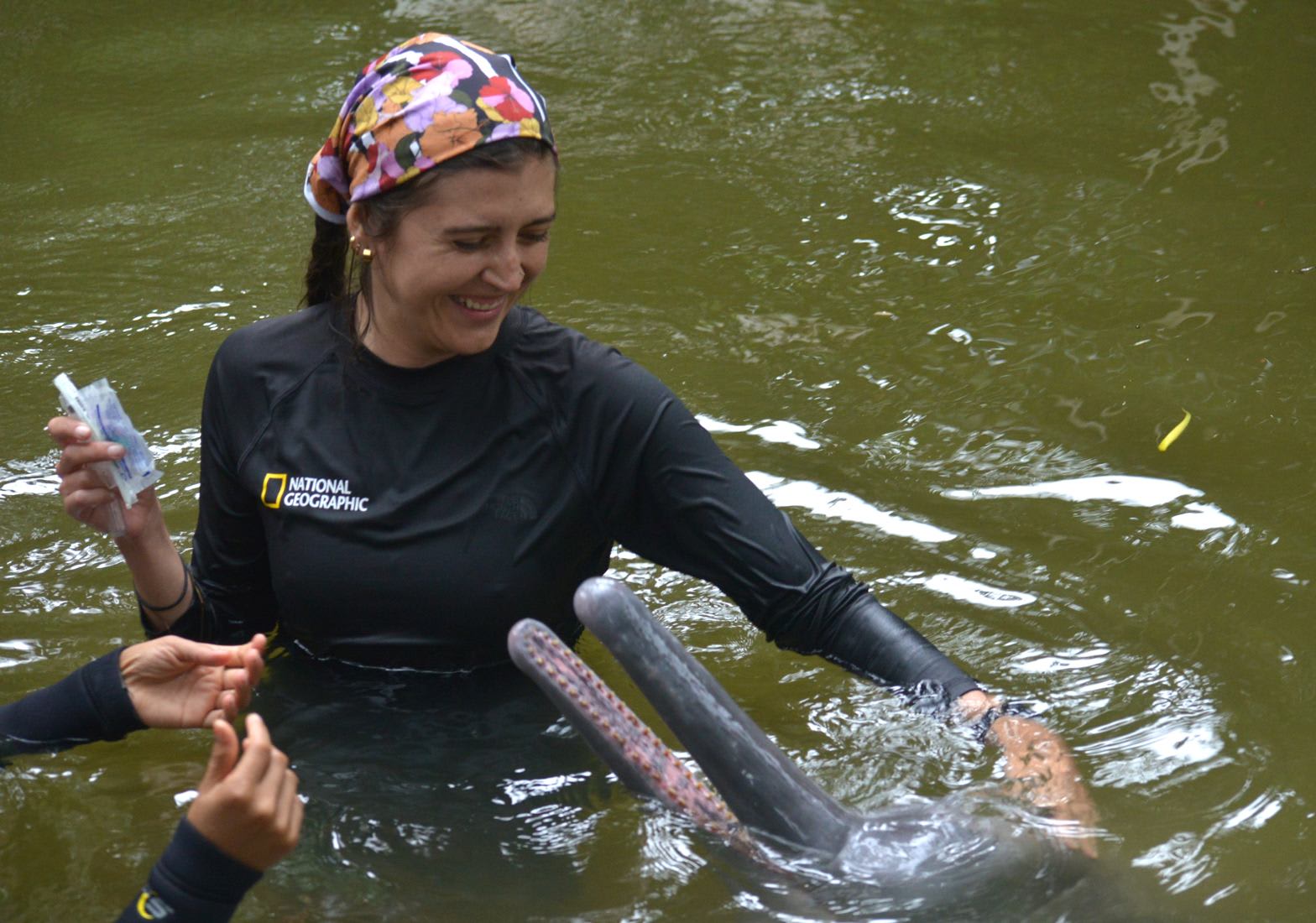
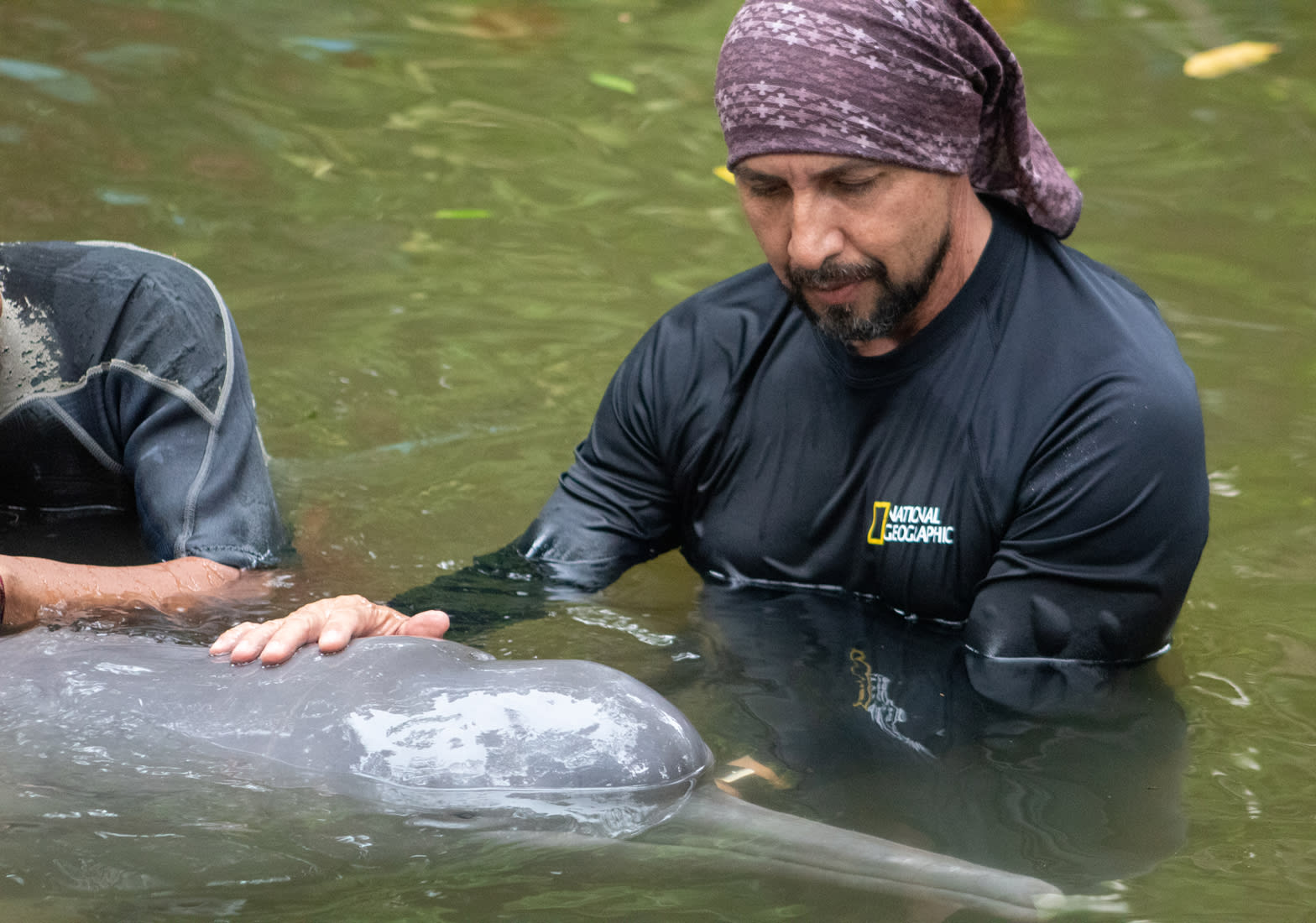
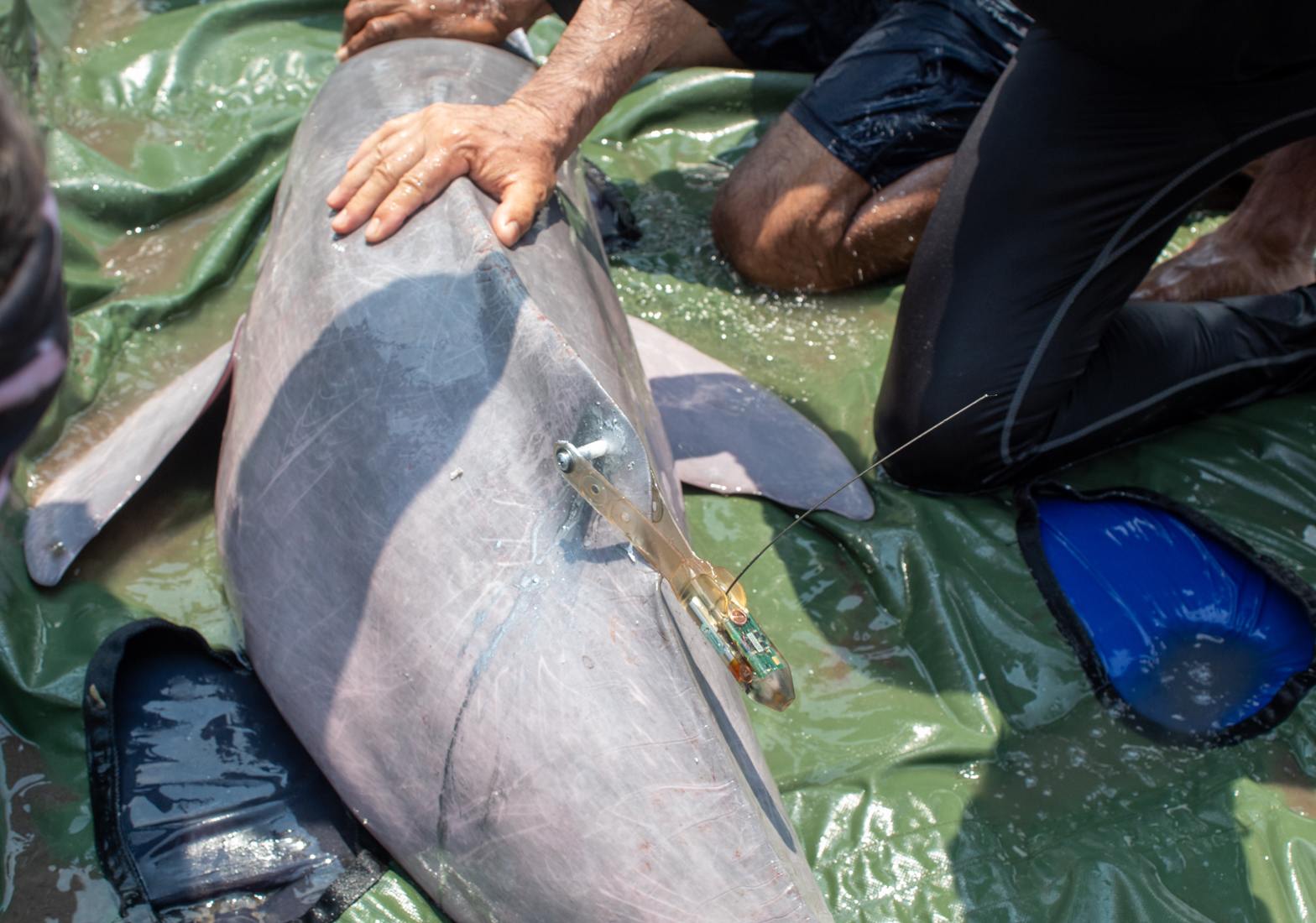

Their tests revealed “high levels of mercury in the dolphins”, Valderrama points out, which is a concern not only for the dolphins, but for the local communities that eat the same fish. However, the amazing resilience of the Amazon ecosystem gives Trujillo hope: “I am hopeful mercury could be cleaned out of the water in less than a decade and that we will have healthy fish populations.”

Promising results
So far, the team estimates there to be more than 3,000 pink river dolphins and almost 4,000 grey dolphins across their study area, far more than previously thought. One place of particular interest was the Javari River, which lies on the border between Brazil and Peru. Trujillo and Valderrama also identified areas that were especially important for the dolphins, where they feed, reproduce and nurture their young, allowing governments to focus their conservation efforts. As Trujillo explains, “The politicians recognize it will be very difficult to protect the whole river system so they ask us scientists to identify these key hot spots for biodiversity to try to make a difference there.”
Despite the team’s promising work, recently more than 150 dolphins perished in Lake Tefé due to record-high water temperatures during the Amazon’s dry season. In October, Trujillo led a meeting on the global declaration for the protection of river dolphins and their rivers that resulted in 11 countries signing a first-of-its-kind declaration committing to develop research-based, transboundary solutions to protect river dolphins around the world.

They want to conserve the area because it’s a place for their children, for their families and for their community. We need local people to save this territory.
Trujillo and Valderrama have also been training fishermen to adopt dolphin-friendly practices and guide tourists to observe these charismatic animals. The ecotourism industry is crucial in providing an income for locals that does not create conflict with the Amazon’s ecosystems. They have also taught more than 500 people to count the dolphins, helping to create an enduring legacy of conservation across the regions they visited. “They want to conserve the area because it’s a place for their children, for their families and for their community,” says Valderrama, “we need local people to save this territory.”
Through the river dolphins, Trujillo and Valderrama are showing the importance of water quality. Trujillo is confident that bringing together indigenous and scientific knowledge will make a difference to conservation in the river basin: “I think we are going to achieve something important with the Perpetual Planet Amazon Expedition.”