Shortcuts

Explore the ocean in 24 hours
National Geographic Society
Published in

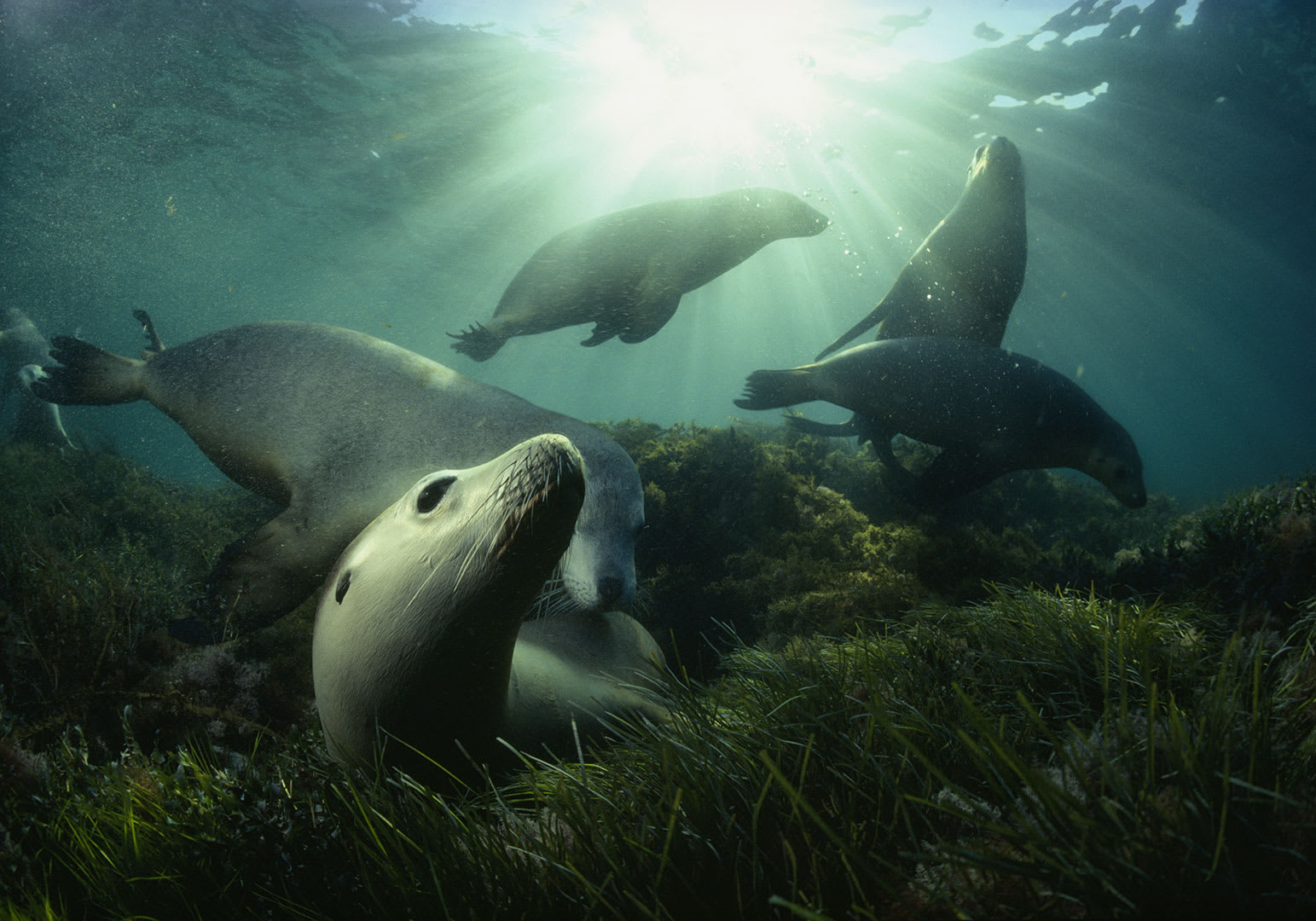
- 12 p.m. Great Australian Bight. Around noon, overhead sunlight breaks through the teal surf of the Great Australian Bight off the mainland's southern coast. A cluster of sea lions weaves through the marine greenery, likely searching for a lunch of southern bluefin tuna. Years of heavy fishing have decreased the amount of prey available to the sea lions in recent years, though a growing coalition of conservation groups, industry representatives, and governments is working to restore ocean habitats through creation of marine protected areas, science-based catch management, new technologies, and other practices. PHOTOGRAPH BY DAVID DOUBILET, NATIONAL GEOGRAPHIC CREATIVE.
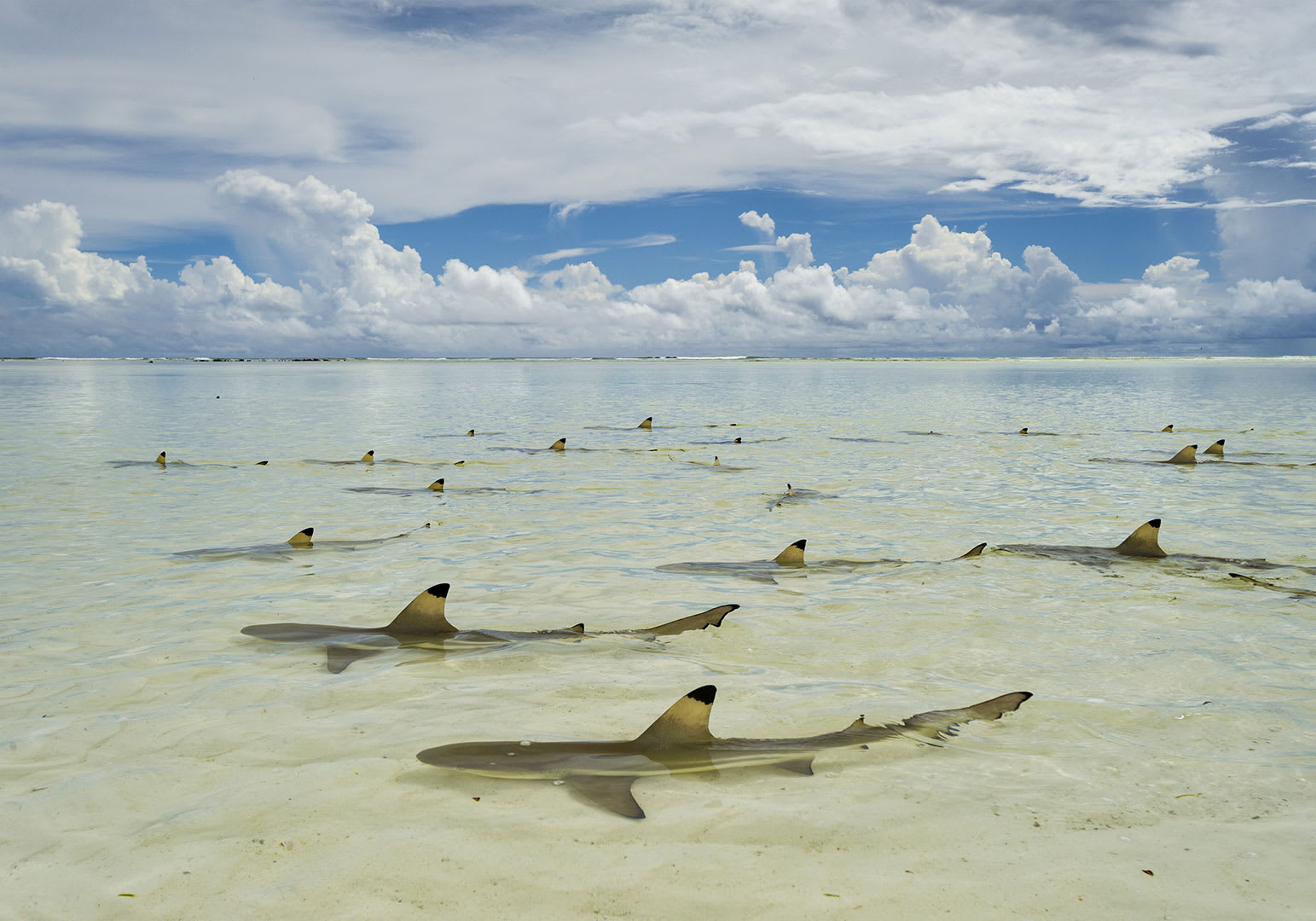
- 1 p.m. The Seychelles. Blacktip reef sharks wait patiently for the tide to refill the shallow lagoon at Aldabra Atoll in the Seychelles in the Indian Ocean. In the past, rats, cats, and goats have been introduced to the remote UNESCO World Heritage site, threatening the habitat's large but vulnerable population of giant tortoises. Now conservationists are working to remove such invaders from various islands, giving native species a chance to rebound. PHOTOGRAPH BY THOMAS P. PESCHAK, NATIONAL GEOGRAPHIC
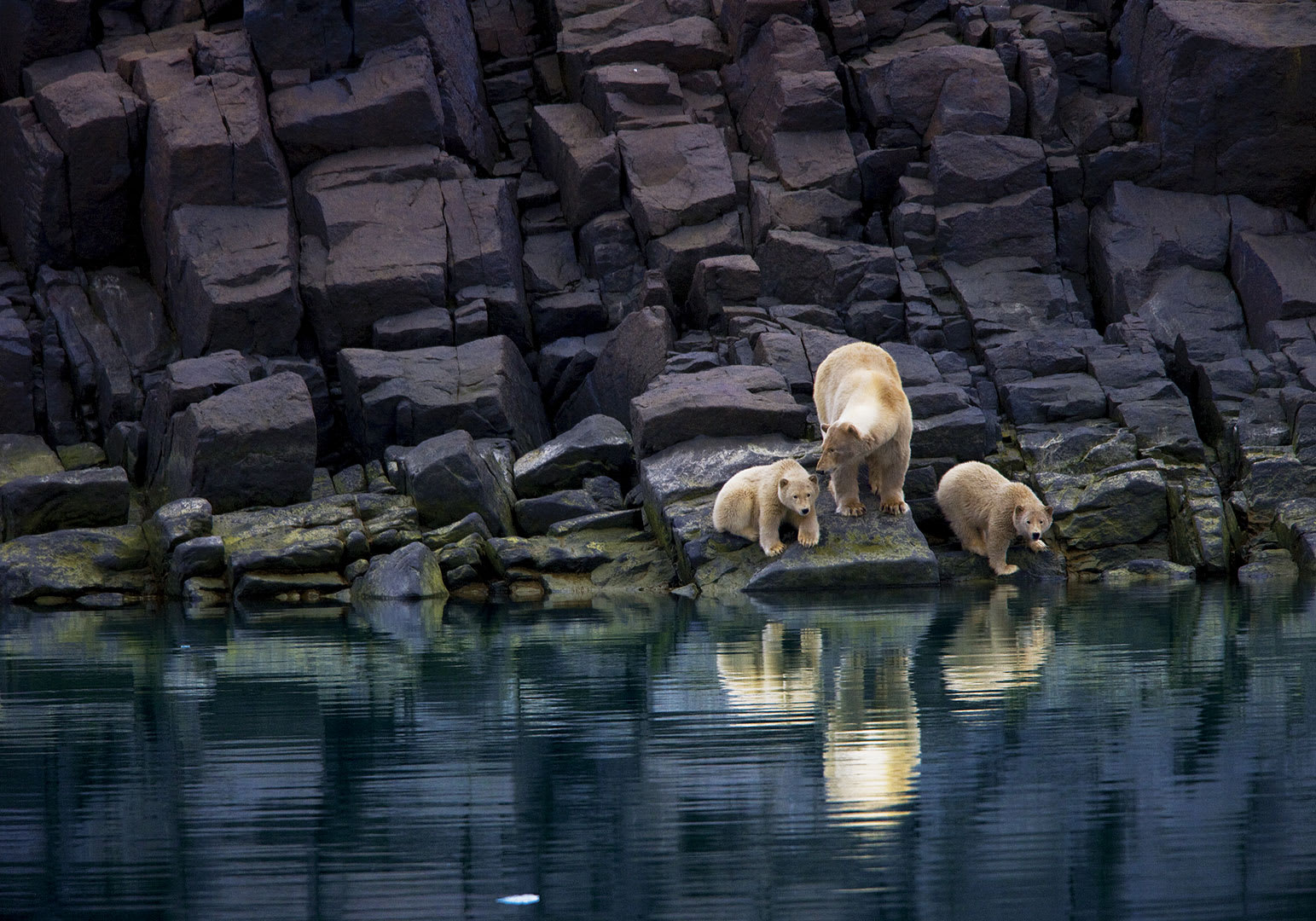
- 2 p.m. Nunavut. At Cape Fanshawe, Canada, a cluster of polar bears hangs on the edge of a fjord. Polar bears are an important indicator of ecosystem health. The large predators are threatened by climate change as parts of the sea ice they rely on are melting away. The bears seem to be faring better in some parts of their range, however, suggesting that it's not too late for the species to adapt and survive, particularly as the human world works on solutions to climate change. PHOTOGRAPH BY PAUL NICKLEN, NATIONAL GEOGRAPHIC CREATIVE.
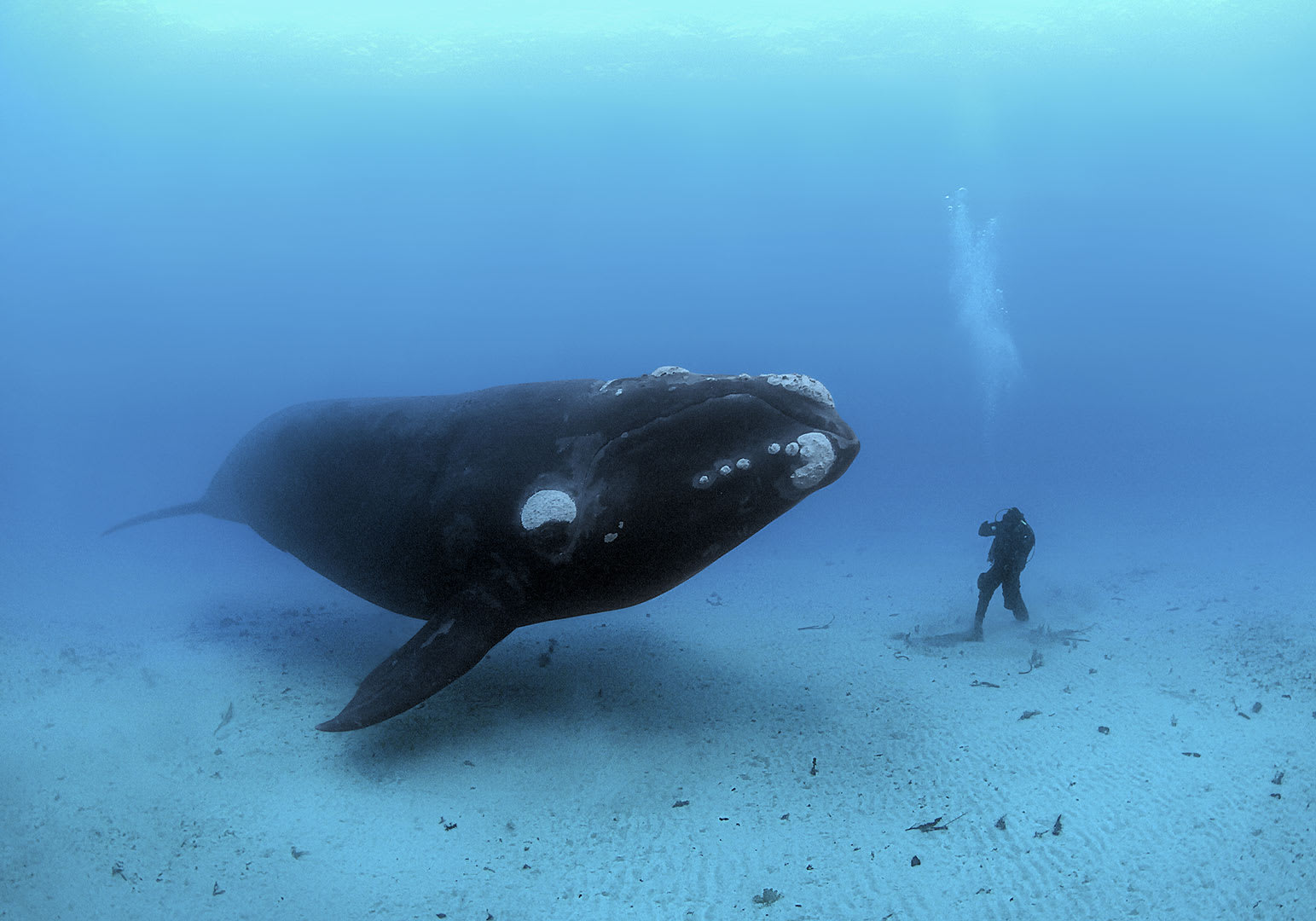
- 3 p.m. Auckland Islands. An adult southern right whale inspects a diver on the sandy sea bottom near the Auckland Islands of New Zealand. Measuring up to 60 feet in length and weighing up to 90 tons, these marine mammals remain endangered since the days of industrial whaling. In response, countries have implemented conservation and programs. PHOTOGRAPH BY BRIAN SKERRY, NATIONAL GEOGRAPHIC CREATIVE.
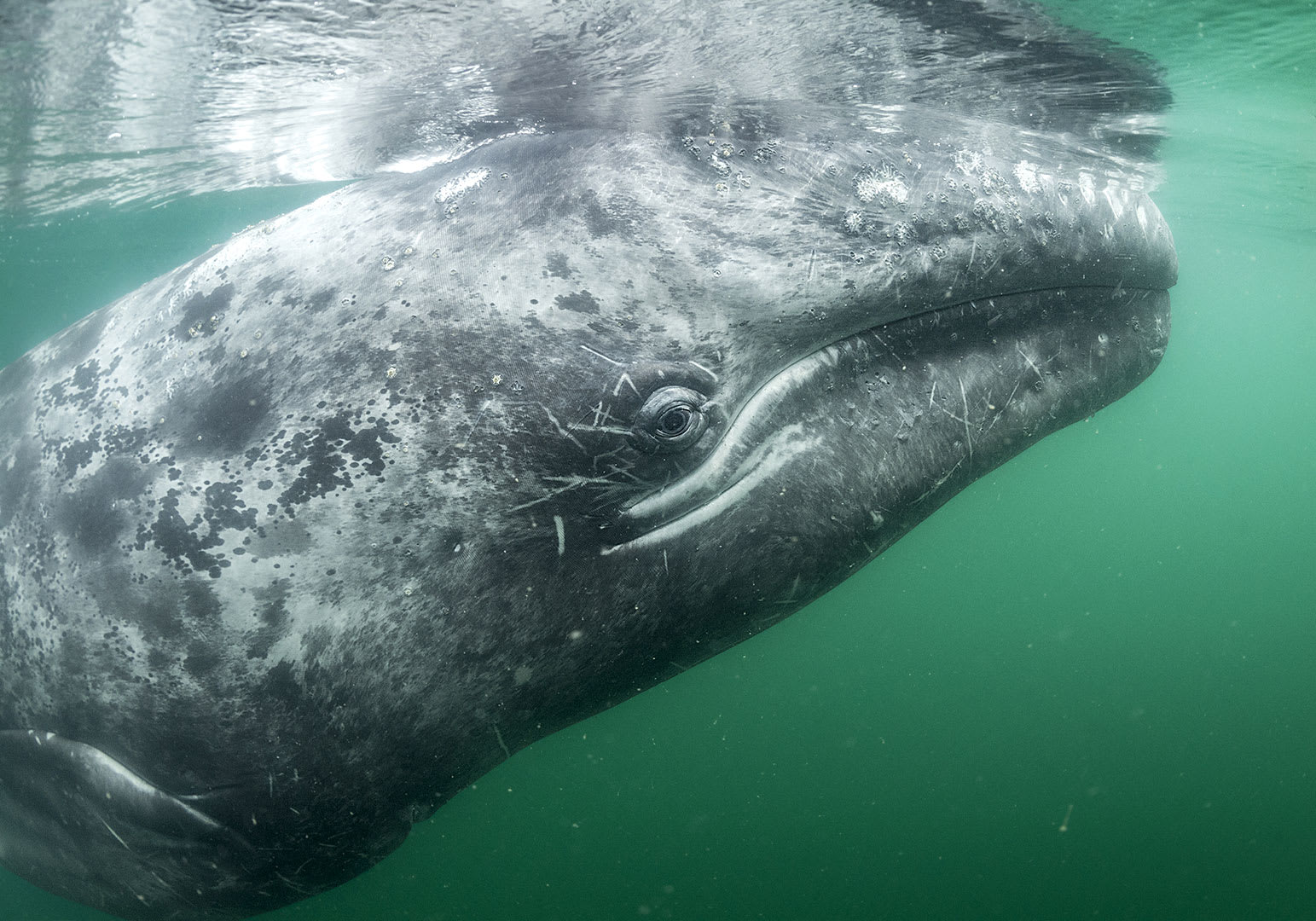
- 4 p.m. Baja California. A braceleted tourist reaches down into warm, teal waters to pet one of the gray whales that breed at Laguna San Ignacio in Baja California, Mexico. Mexican laws protect the whales, and the migrating mammoths are listed as critically endangered. They're threatened by fishing practices, boat collisions, and side effects of climate change, though officials and conservationists are exploring solutions. PHOTOGRAPH BY THOMAS P. PESCHAK, NATIONAL GEOGRAPHIC CREATIVE.
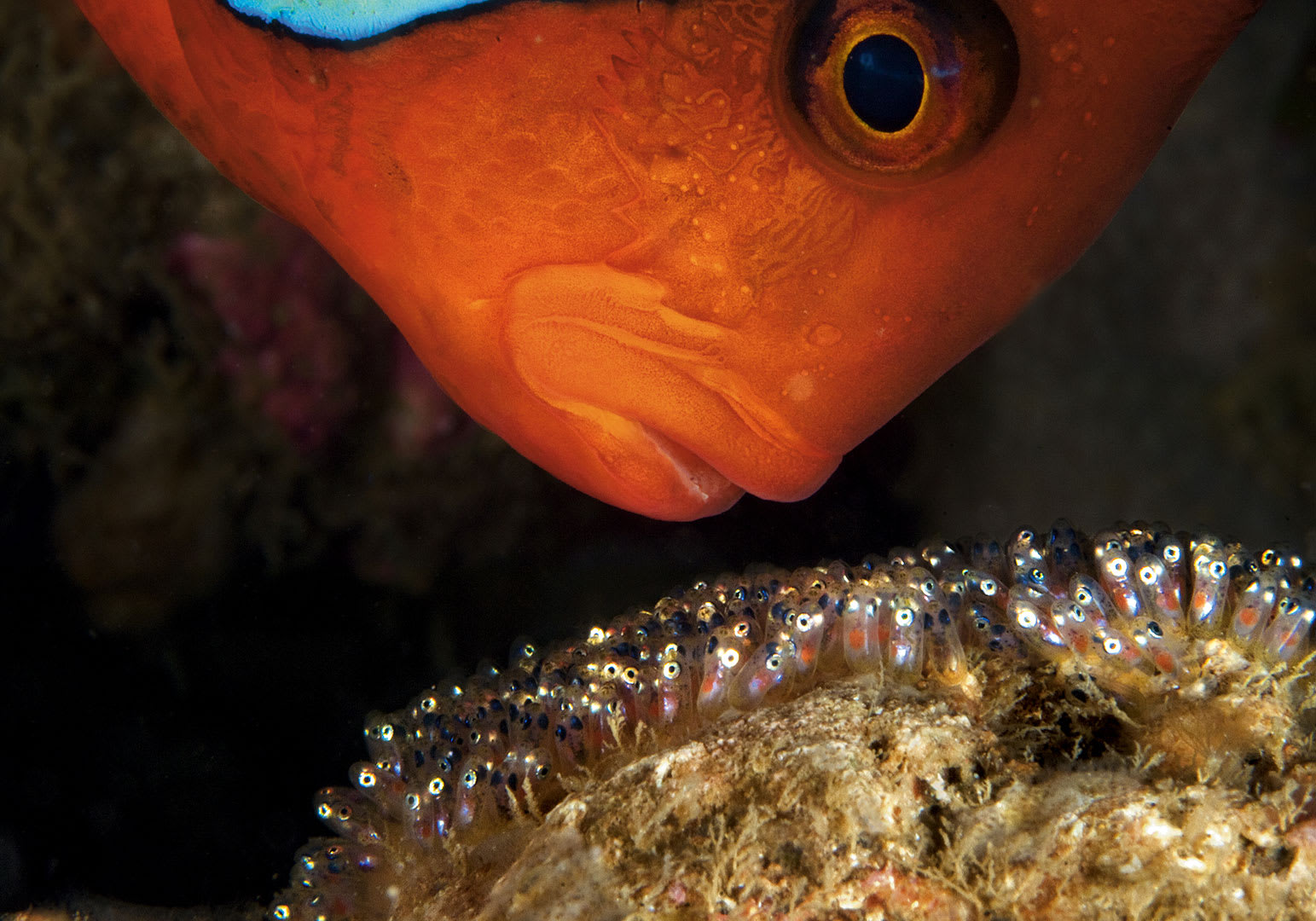
- 5 p.m. Western Pacific. A tomato clownfish tends to his partner's eggs in the waters of the western Pacific. Also called fire clowns, these fish make their homes in the stinging tentacles of sea anemones, which they are immune to. Clownfish are sequential hermaphrodites, which means they develop into males first and become females as they mature. The largest, most aggressive fish in a group is often a female. PHOTOGRAPH BY DAVID DOUBILET, NATIONAL GEOGRAPHIC CREATIVE.
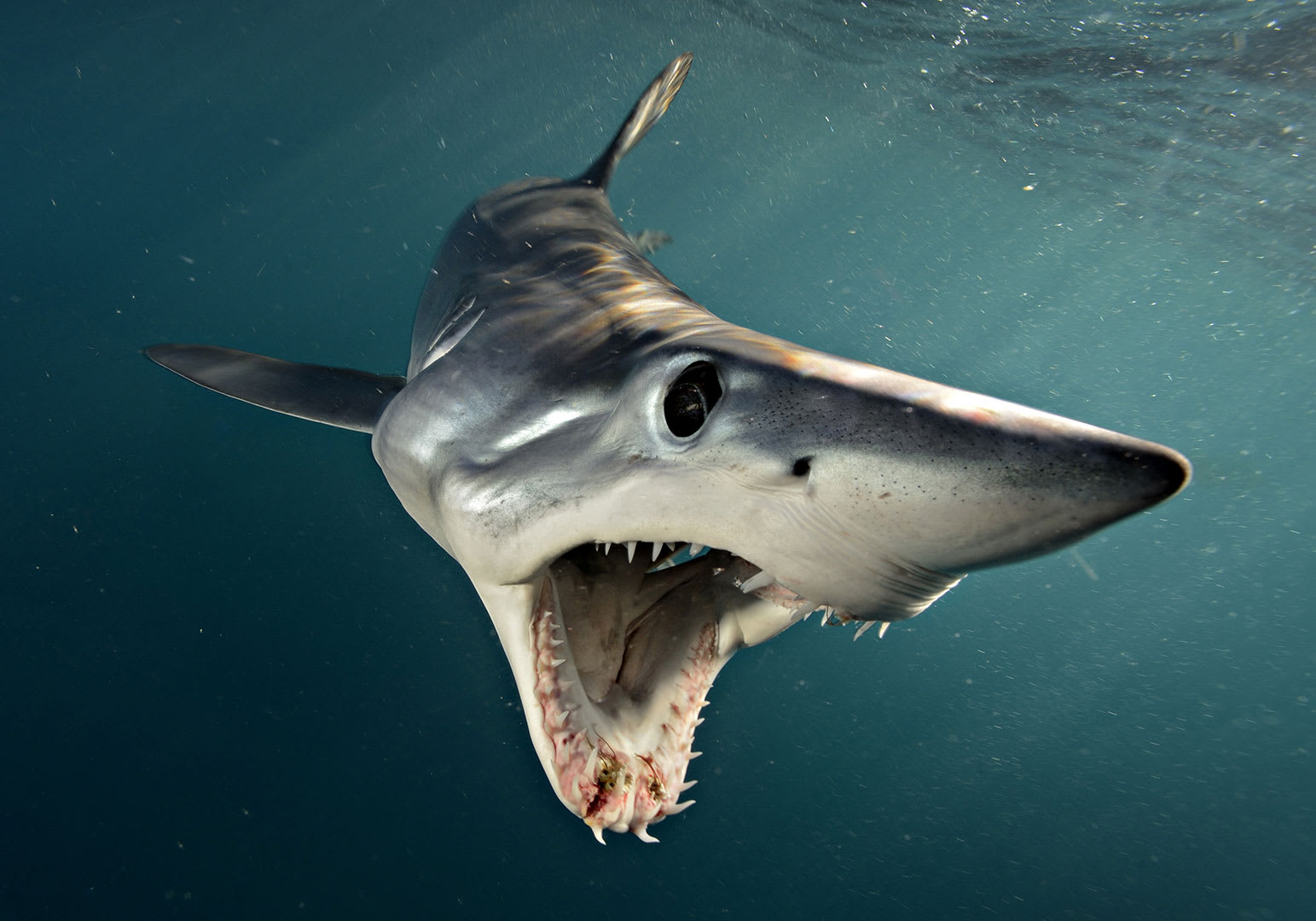
- 6 p.m. New Zealand. A shortfin mako shark swoops in for dinner off the west coast of the North Island of New Zealand. As the fastest species of shark in the world, the mako's agility is attractive to anglers. They're targeted by commercial fisheries for their flesh, fins, oil, livers, and cartilage, as well as their jaws and teeth. The vulnerable species is also often caught as bycatch in nets with other marine life. Conservationists hope new shark sanctuaries, education campaigns, and new technologies will lead to a recovery in shark numbers. PHOTOGRAPH BY BRIAN SKERRY, NATIONAL GEOGRAPHIC CREATIVE.
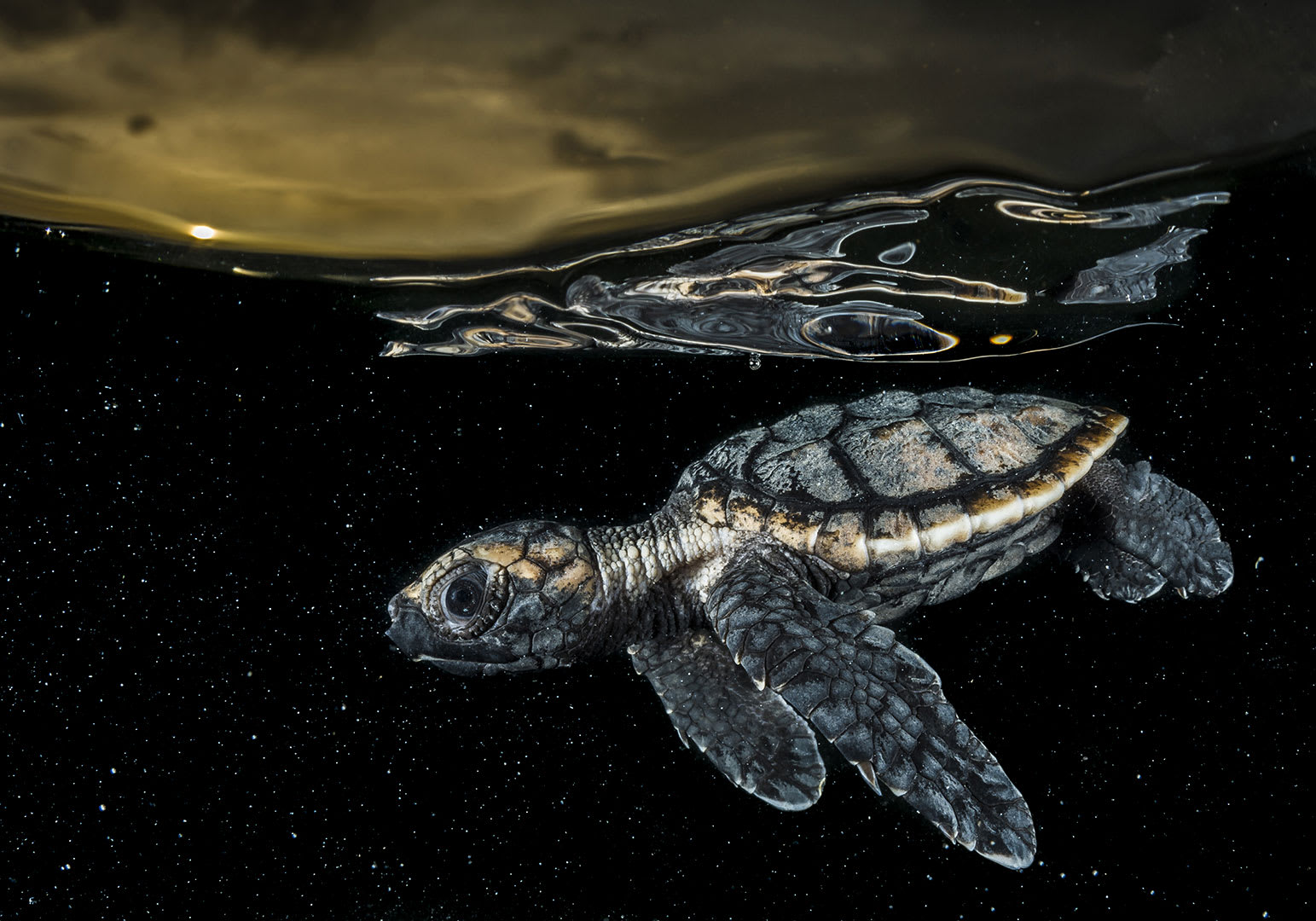
- 7 p.m. Cuba. A hawksbill sea turtle hatchling swims for the open sea at dusk in Cuba's Gardens of the Queen National Park. This remote marine preserve is a haven for the critically endangered species, which has been decimated by fishing practices, pollution, and loss of habitat associated with coastal development. Hawksbills have been harvested for their shells, which can slightly change color depending on the temperature of the water. Well-protected reserves give the species a chance to breed in peace. PHOTOGRAPH BY DAVID DOUBILET AND JENNIFER HAYES, NATIONAL GEOGRAPHIC CREATIVE.
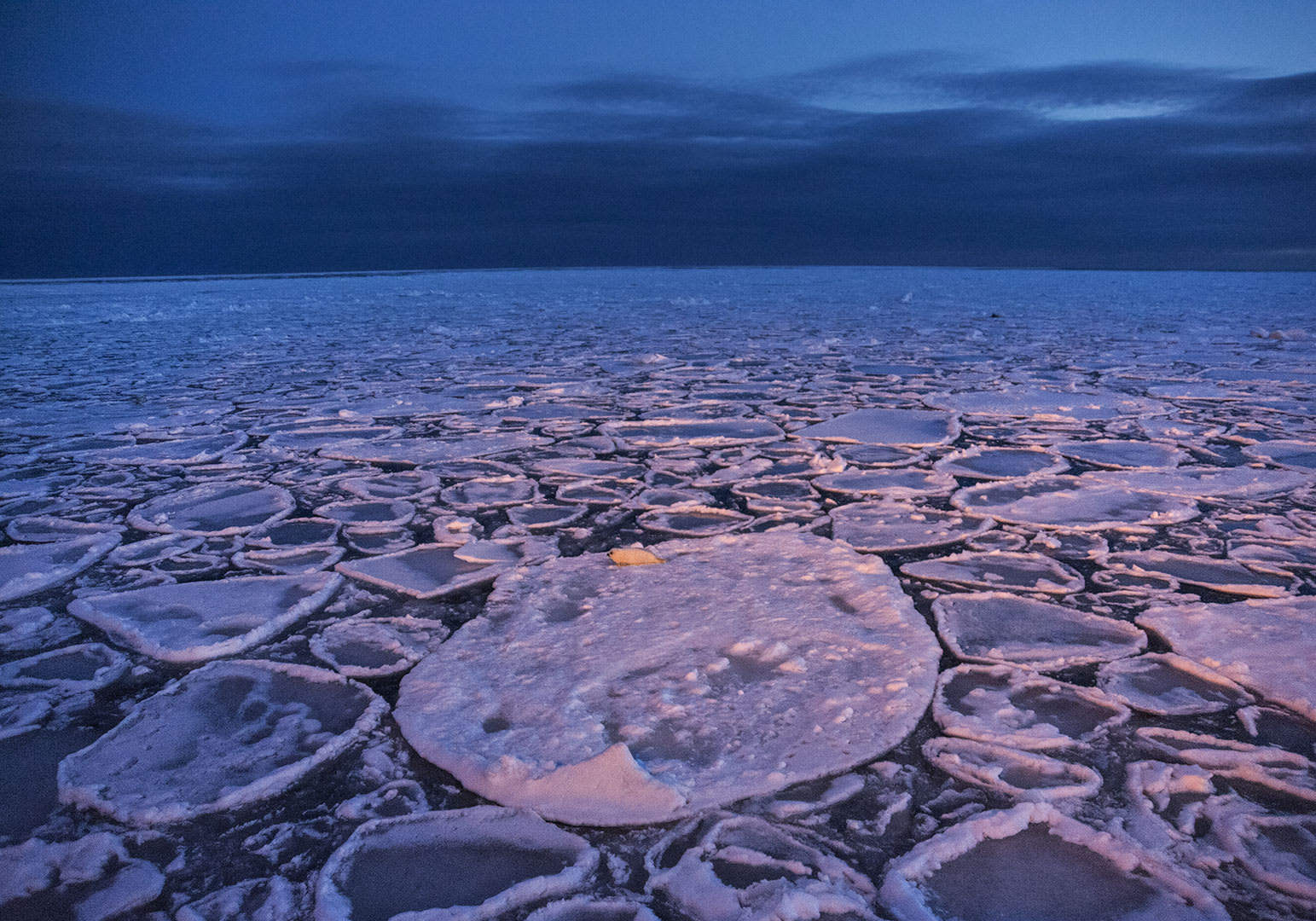
- 8 p.m. Gulf of St. Lawrence. A lone harp seal pup scoots around an ice pan in the Gulf of St. Lawrence near Canada. Harp seals are born with fluffy white fur, which lasts them up to three weeks before they don the sleek gray suit of their parents. Experts warn that climate change-related melting of sea ice can lead to an increase in seal pup deaths, calling attention to the need for international action on the issue. PHOTOGRAPH BY DAVID DOUBILET, NATIONAL GEOGRAPHIC CREATIVE.
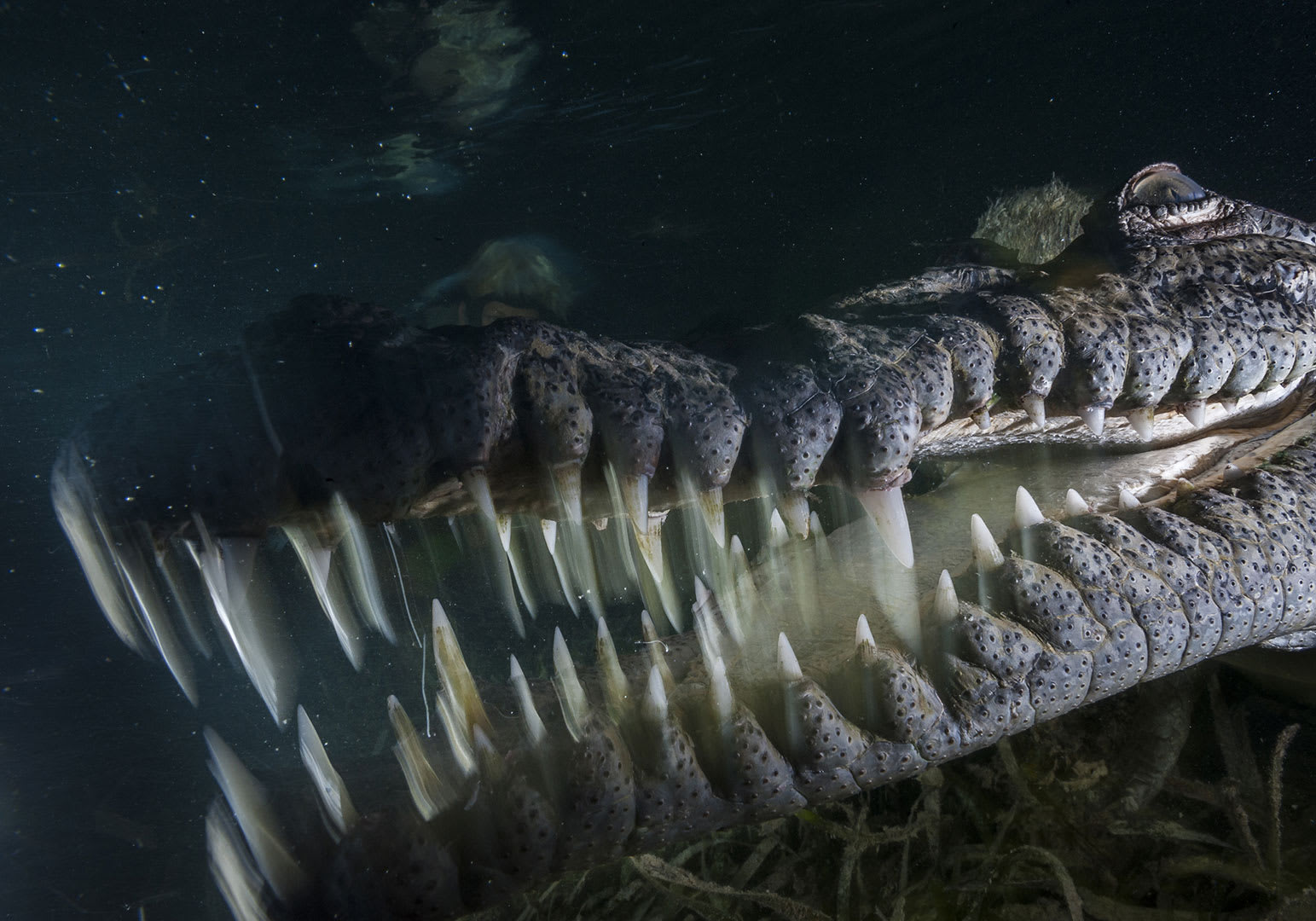
- 9 p.m. Cuba. After nightfall an American crocodile lurks in the dense, dark mangroves of Cuba's Gardens of the Queen National Park. Crocodiles create pathways that improve nutrient circulation, which enhances these swampy ecosystems. Due to hunting, pollution, loss of habitat, and commercial farming, the species is considered vulnerable and is endangered in parts of its range. Conservationists hope increased attention will lead to a recovery of the species, which is often overshadowed in the public eye by more numerous American alligators or caimans. PHOTOGRAPH BY DAVID DOUBILET AND JENNIFER HAYES, NATIONAL GEOGRAPHIC CREATIVE.
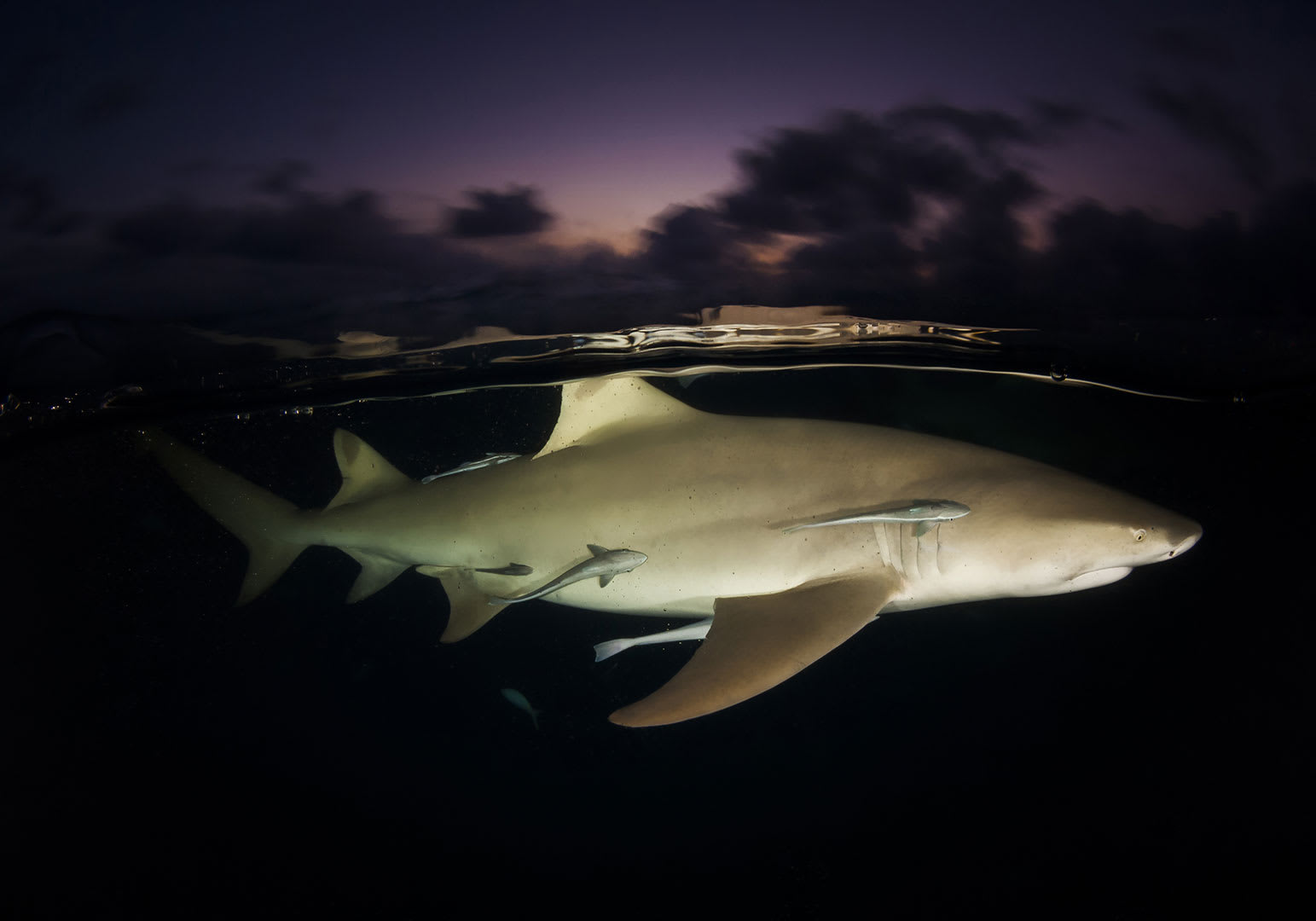
- 10 p.m. Bahamas. A near-threatened lemon shark hunts for a late-night snack in the subtropical waters of the Bahamas with a group of remoras in tow. Lemon sharks often prey at night, using electroreceptors to scope out fish. They'll stalk prey by speeding up to it and then breaking suddenly before grabbing ahold with their powerful jaws. The smell of blood and the sound of struggling fish attract others to the area, and a feeding frenzy ensues. PHOTOGRAPH BY DAVID DOUBILET AND JENNIFER HAYES, NATIONAL GEOGRAPHIC CREATIVE.
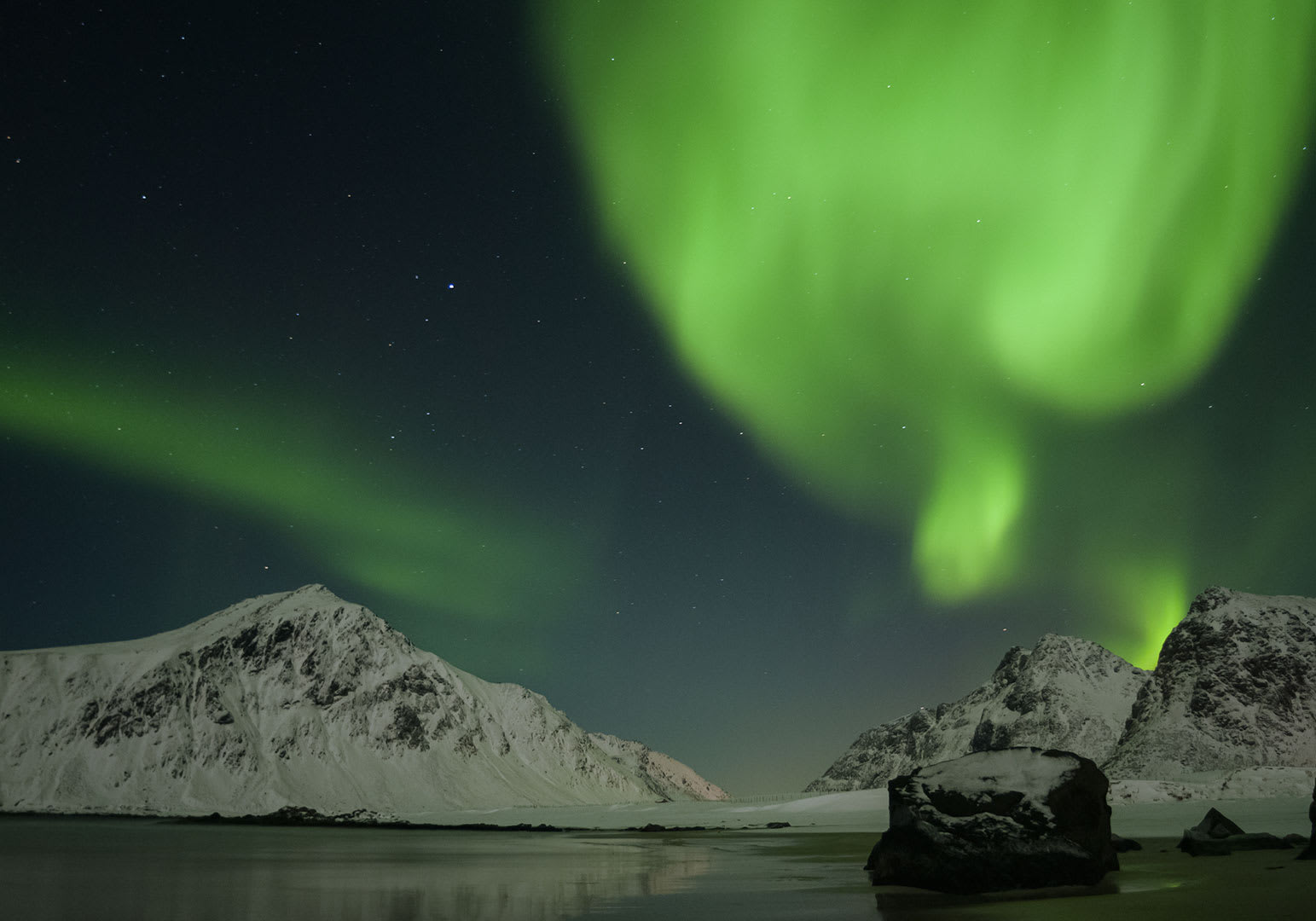
- 11 p.m. Norway. Just before midnight a vibrant green aurora dances in the sky above Norway's Skagsanden Beach. The northern lights appear when electrically charged particles from the sun collide with gaseous particles in the Earth's atmosphere, producing colorful curtains of light. It's a reminder of how our world is connected to the universe beyond what we can normally see. PHOTOGRAPH BY ORSOLYA HAARBERG, NATIONAL GEOGRAPHIC CREATIVE.
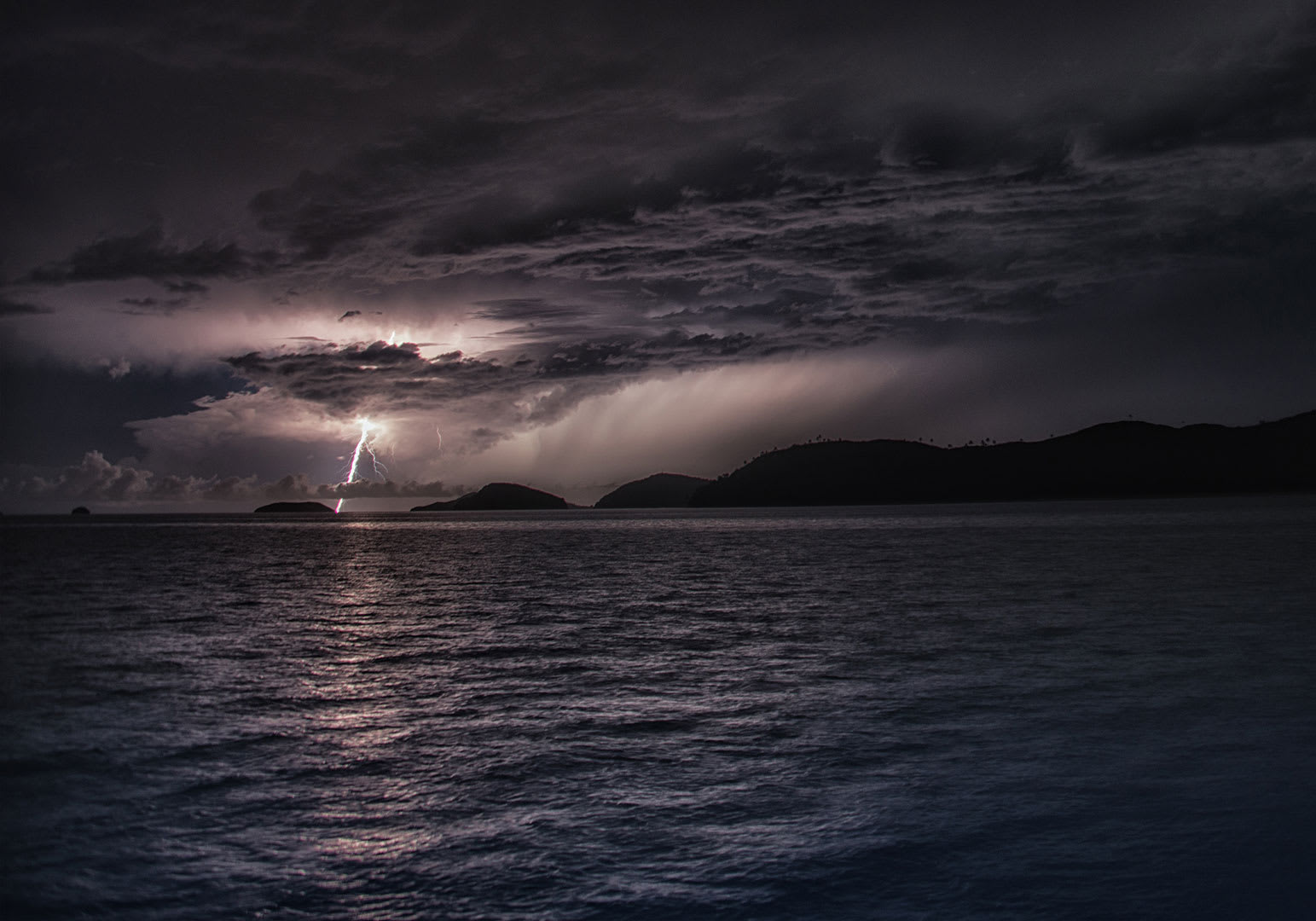
- 12 a.m. Fiji. Out across the waters of Fiji, lightning strikes. A network of forests, mountains, and coral reefs spreads across the nation's hundreds of islands. Climate change threatens Fiji's natural resources with unpredictable weather and sea level rise, and unsustainable fishing practices and illegal logging have depleted its local habitats. Now conservationists are asking if recent success stories on other islands could be replicated there. PHOTOGRAPH BY ANDY MANN.
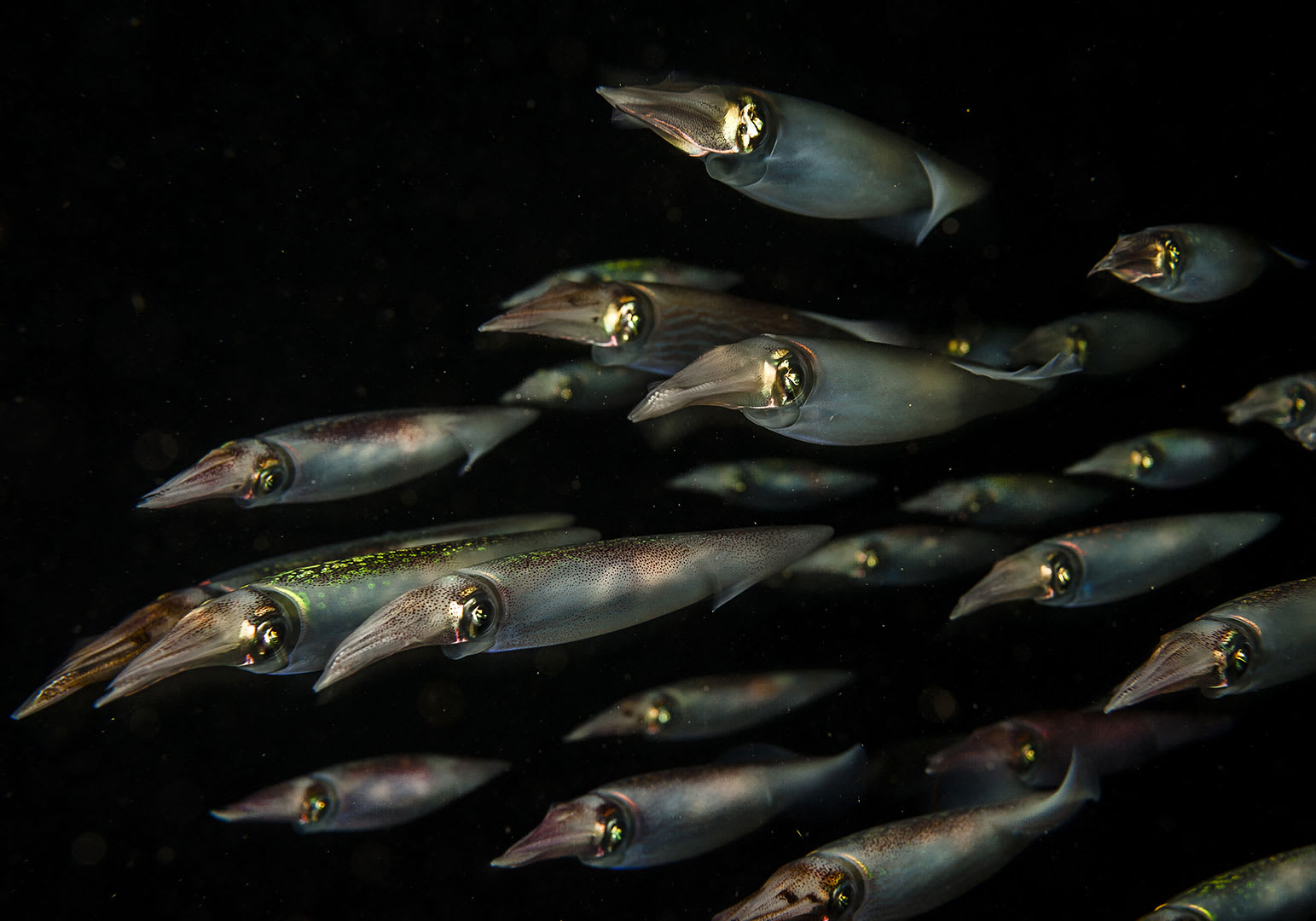
- 1 a.m. Cuba. A squad of torpedo-shaped reef squid swarms the coral reefs at Cuba's Gardens of the Queen National Park. As voracious eaters, these multicolored mollusks consume 30 to 60 percent of their body weight every day. Around the world, coral habitats are dying off because of coral mining, pollution, and overfishing, among other factors. Yet research into restoring and protecting coral is progressing apace, and some data suggest the animals may be more resilient than previously thought. PHOTOGRAPH BY DAVID DOUBILET AND JENNIFER HAYES, NATIONAL GEOGRAPHIC CREATIVE.
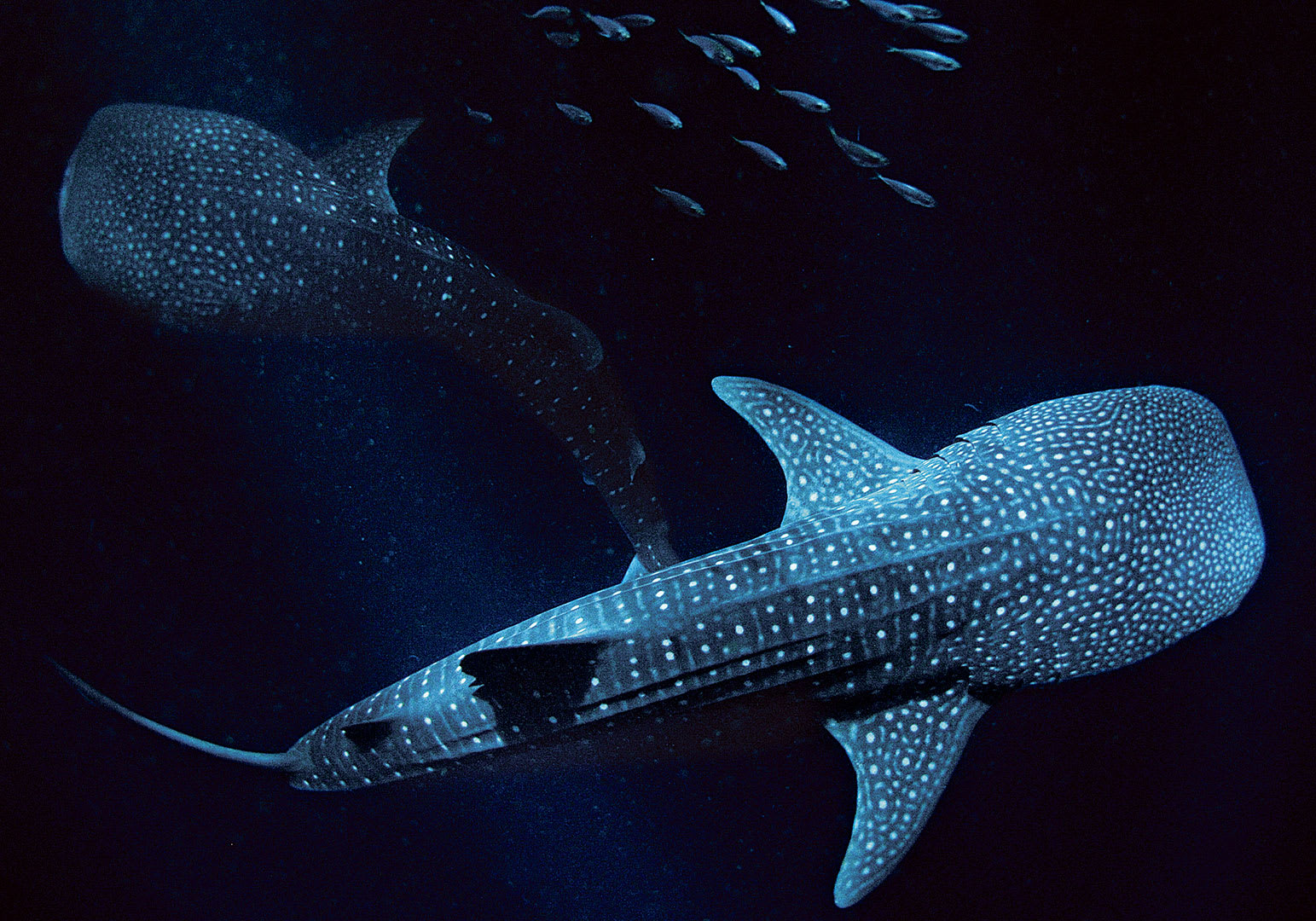
- 2 a.m. Djibouti. Around 2 a.m., whale sharks cross paths near Djibouti off the Horn of Africa. The docile animals are the largest fish in the sea and munch on meals of plankton through filter feeding. They're harmless to humans and, in fact, have been known to let swimmers occasionally hitch a ride. The species is endangered, but they're still hunted in parts of Asia, like the Philippines. Recent conservation efforts are taking aim at demand for their parts. PHOTOGRAPH BY THOMAS P. PESCHAK.
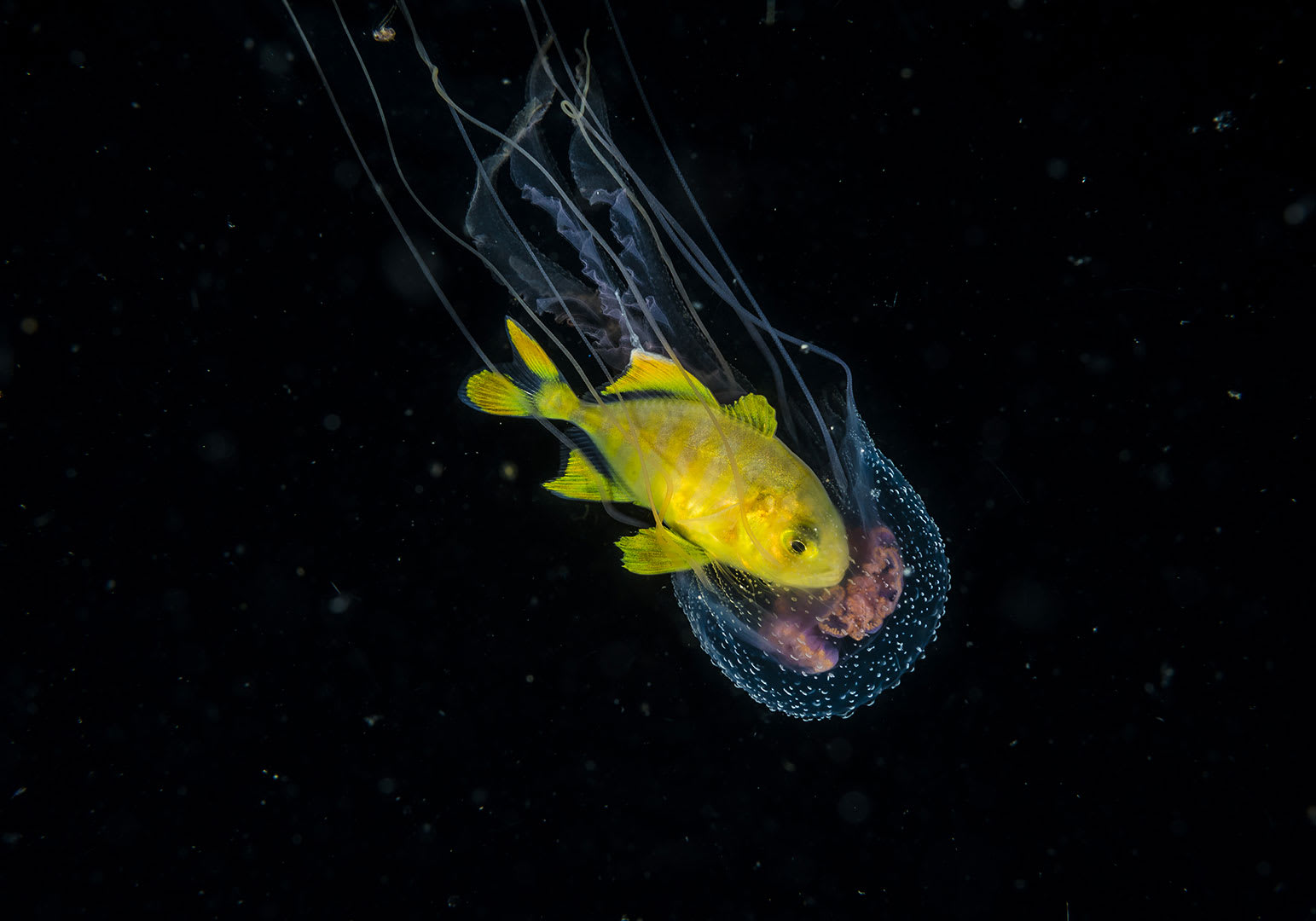
- 3 a.m. Philippines. A juvenile yellow fish hitches a ride and mooches protection off a jellyfish near Moalboal, Philippines. The waters surrounding this spot are a part of the Coral Triangle, a region that hosts six of the world's seven marine turtle species and more than 2,000 reef species. The diversity-rich Coral Triangle is considered the global center of marine biodiversity and is the focus of many conservation efforts. PHOTOGRAPH BY DAVID DOUBILET AND JENNIFER HAYES.
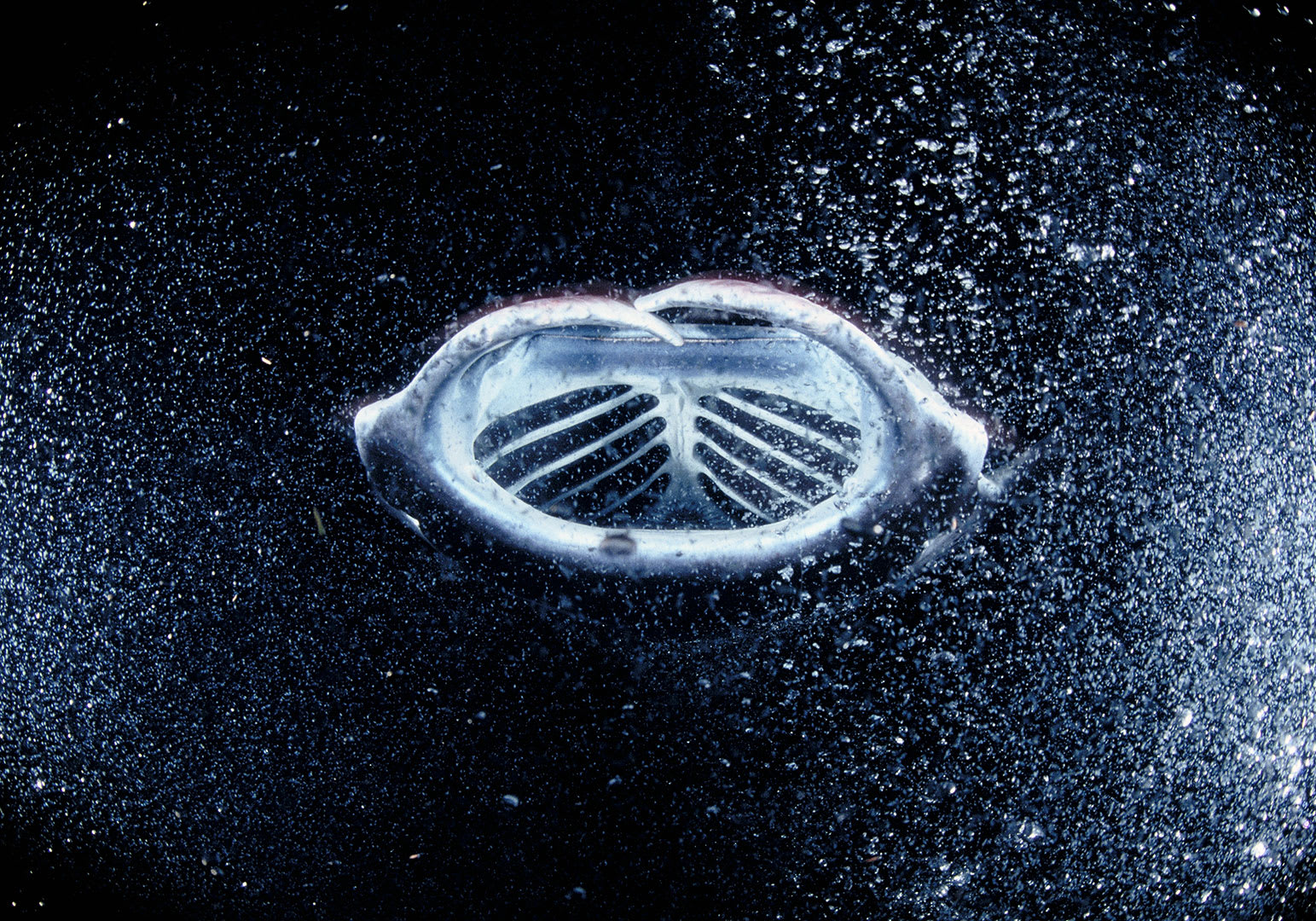
- 4 a.m. Hawaii. It's feeding time for this manta ray in the Kona District of Hawaii's Big Island. These creatures feast on plankton, but their main predator is overfishing. Fisheries will target manta rays for their meat, skin, and the cartilaginous structures that protect their gills. They also often get tangled in nets, trawls, and harpoons, leading to their demise. Now, new conservation efforts are seeking to reduce demand for their parts and decrease their incidental catch. PHOTOGRAPH BY DAVID DOUBILET AND JENNIFER HAYES.
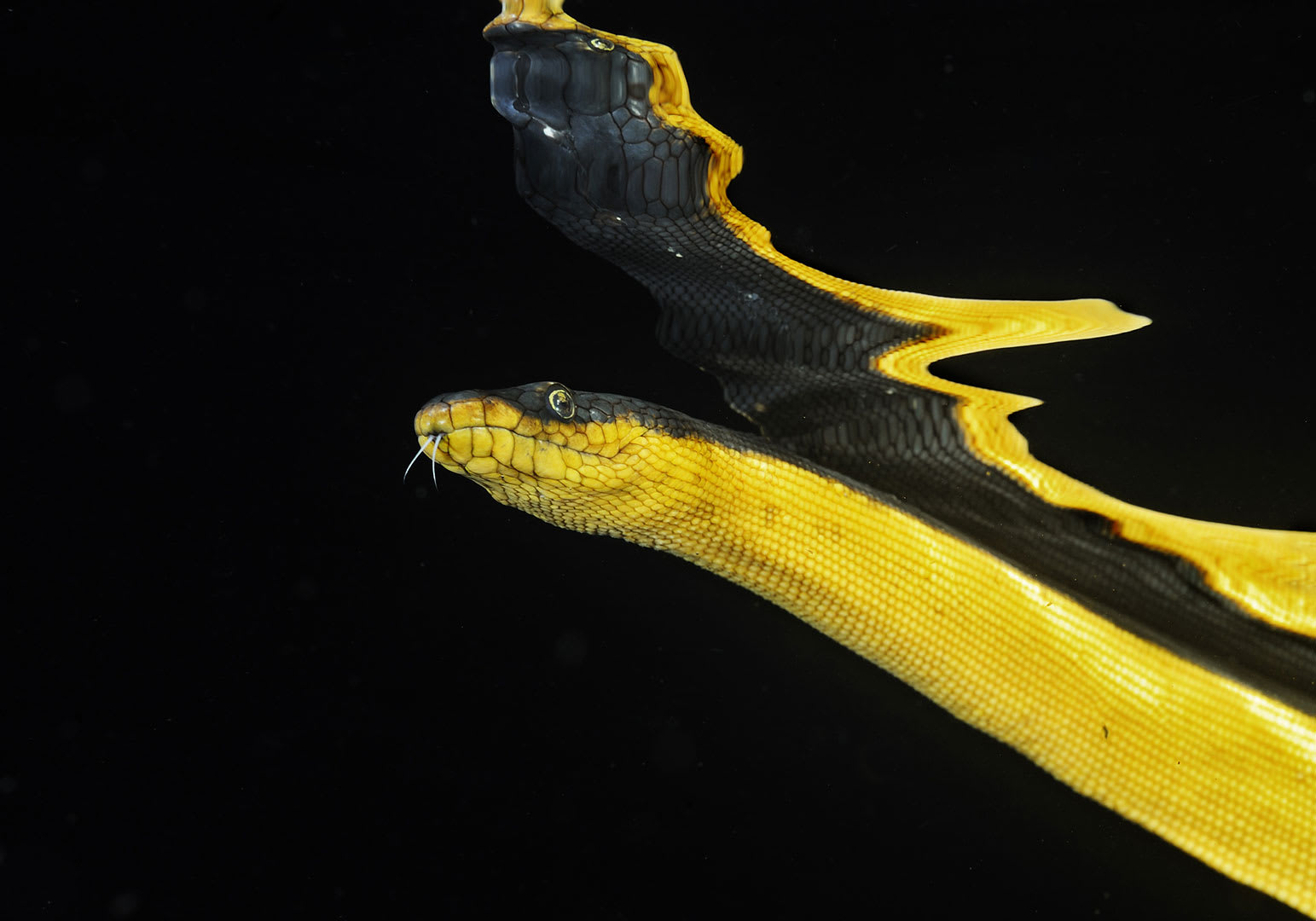
- 5 a.m. Costa Rica. A yellow-bellied pelagic sea snake slithers near the surface of tropical waters over Las Gemelas seamount in Costa Rica's Pacific Ocean. Las Gemelas surrounds the marine protected area of Cocos Island National Park, which is a UNESCO World Heritage site. The only people who live on Cocos Island are park rangers, but tourists and ship crews are permitted to visit. PHOTOGRAPH BY BRIAN SKERRY.
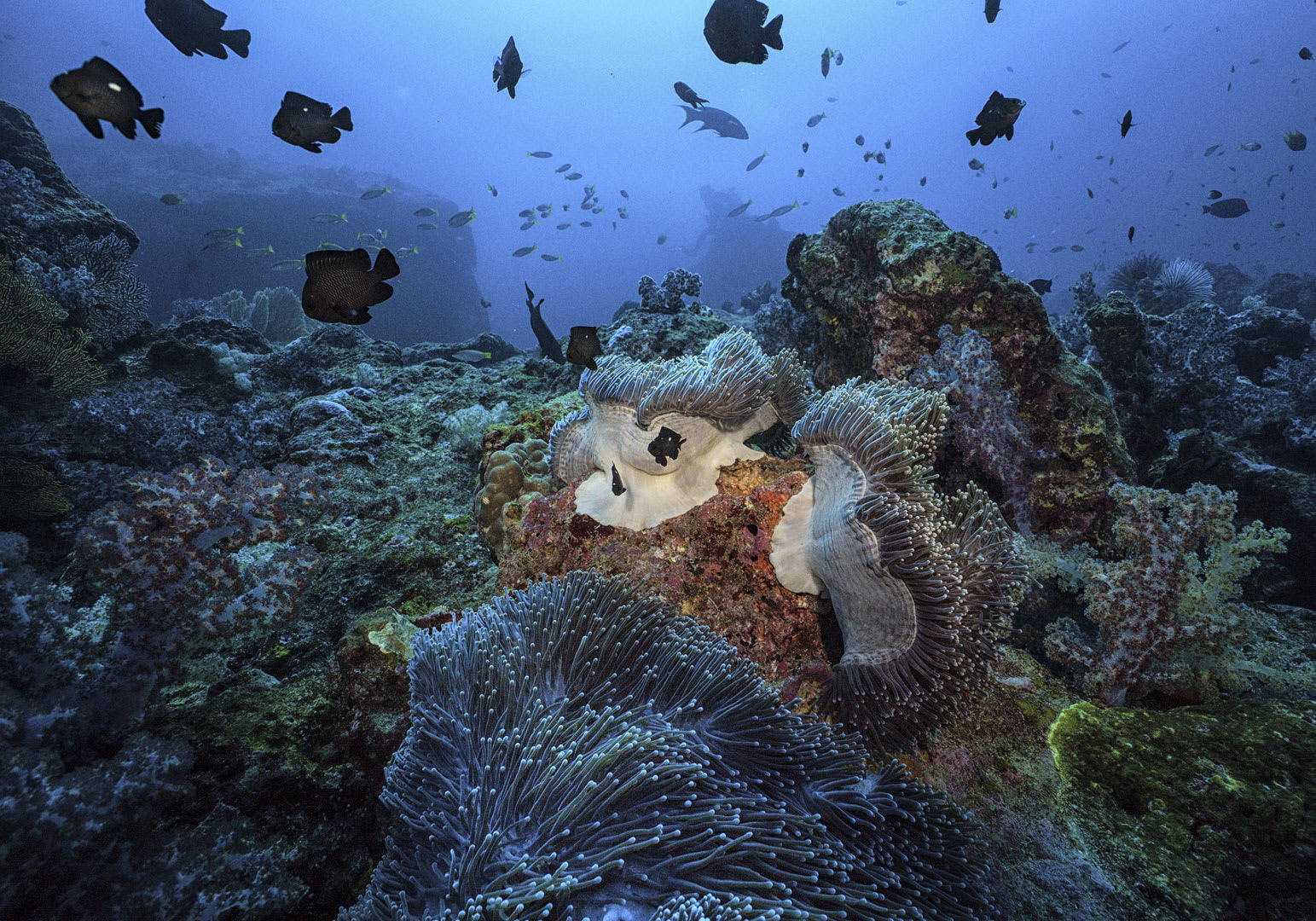
- 6 a.m. Fiji. Early morning sunlight illuminates a coral reef in Fiji during a sunrise dive. The habitat may seem prosperous here, but the country's marine biodiversity is falling, with 67 percent of known mammal species listed as threatened or endangered. Like other habitats, reef ecosystems are threatened by climate change, overfishing, and pollution. Conservationists are pointing to other successes in the region as examples of what's possible. PHOTOGRAPH BY ANDY MANN.
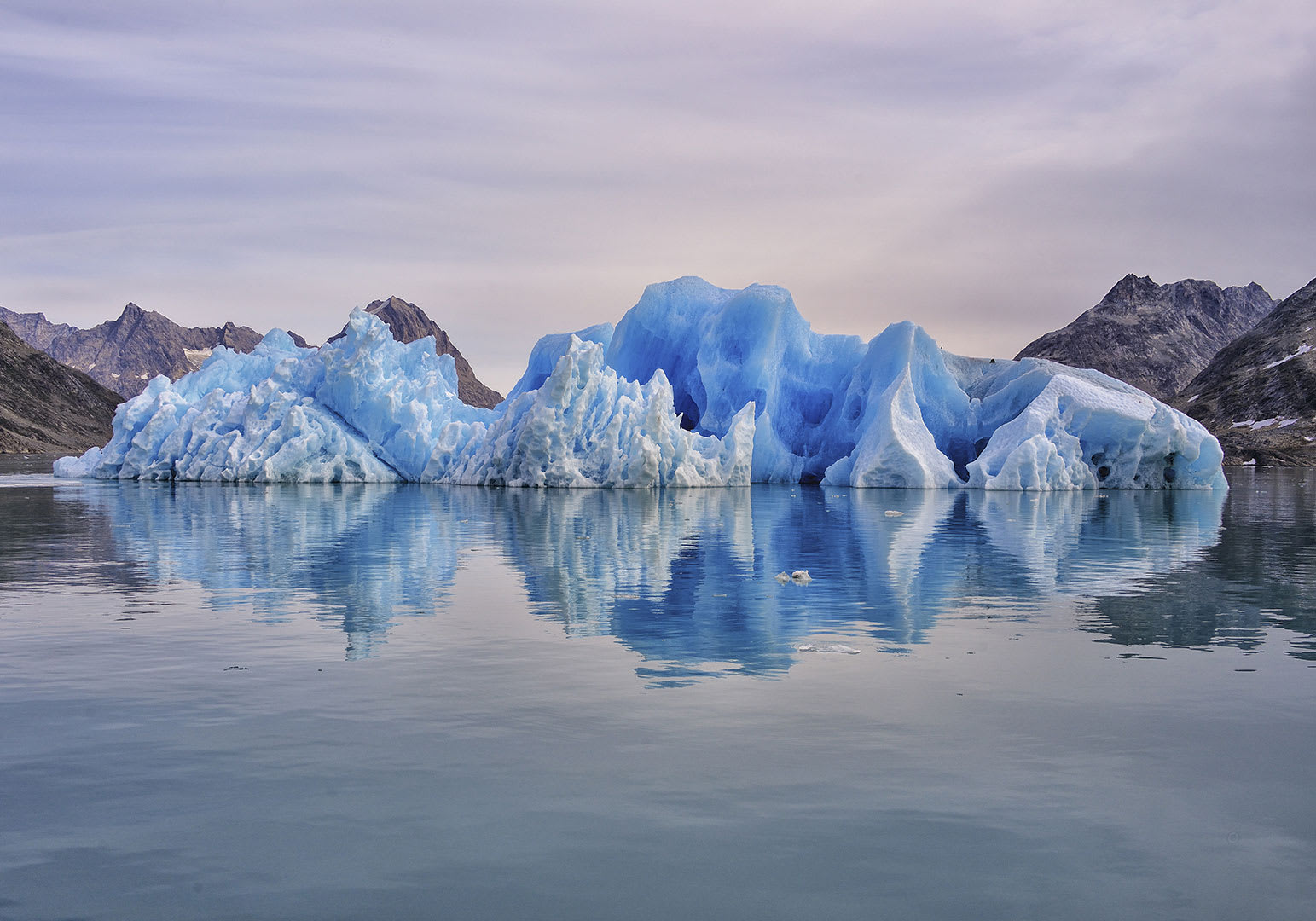
- 7 a.m. Greenland. Icebergs float in the chilly waters of Greenland in this morning shot. Its ice cap, which makes up a majority of the country, is the largest ice sheet in the Northern Hemisphere. If it were to melt, it would raise sea levels by more than 22 feet. That's a reminder of why international action is needed around climate change, scientists say. PHOTOGRAPH BY KEITH LADZINSKI, NATIONAL GEOGRAPHIC CREATIVE.
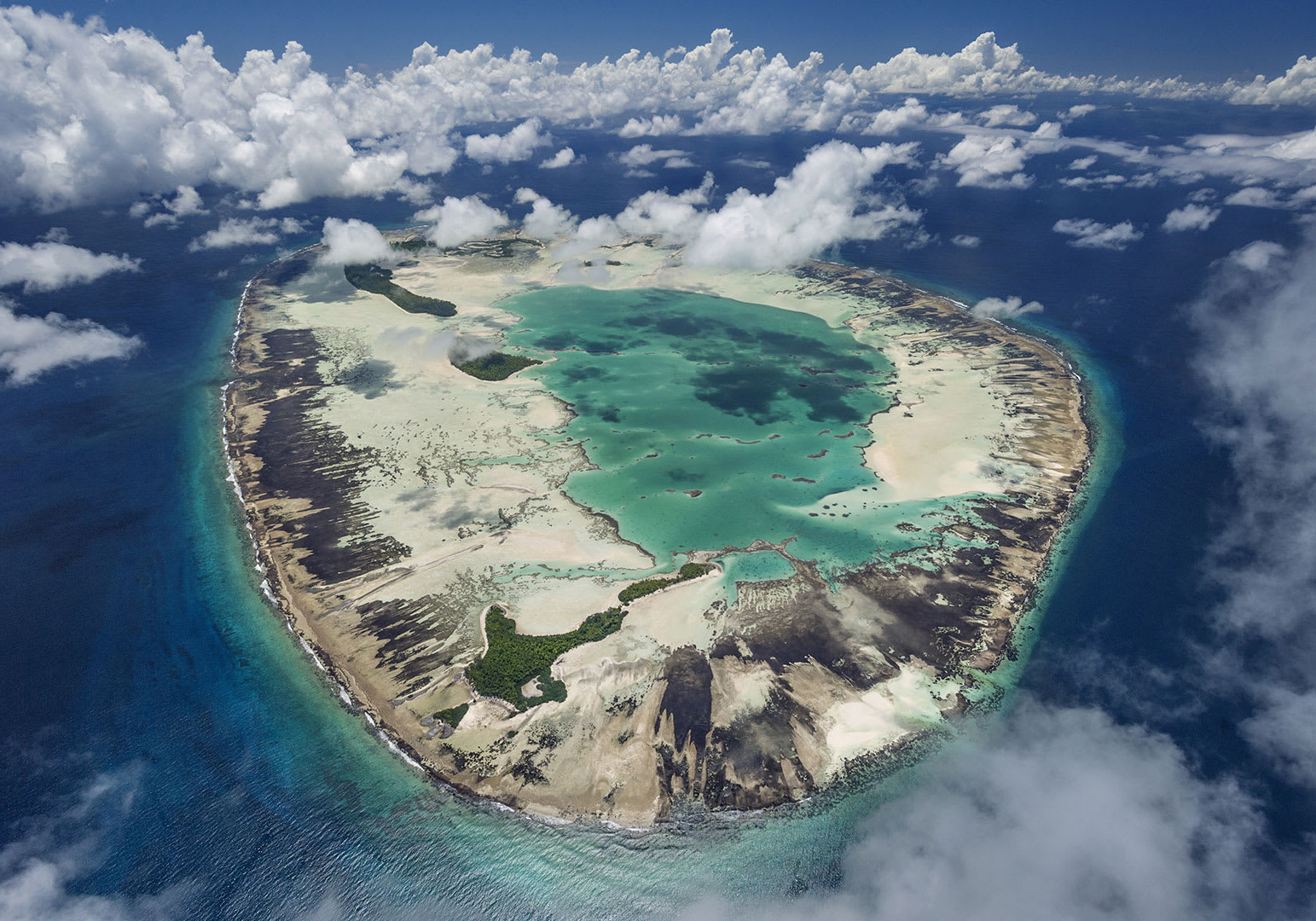
- 8 a.m. St. Joseph Atoll. The sky lights up over St. Joseph Atoll, one of the sandy beaches that make up the Indian Ocean's Seychelles islands. As a nature reserve, the atoll wraps around an enclosed lagoon, creating a marine protected area that's home to creatures like the feathertail stingray, a near-threatened species that is often targeted as a source of shagreen leather. PHOTOGRAPH BY THOMAS P. PESCHAK, NATIONAL GEOGRAPHIC CREATIVE.
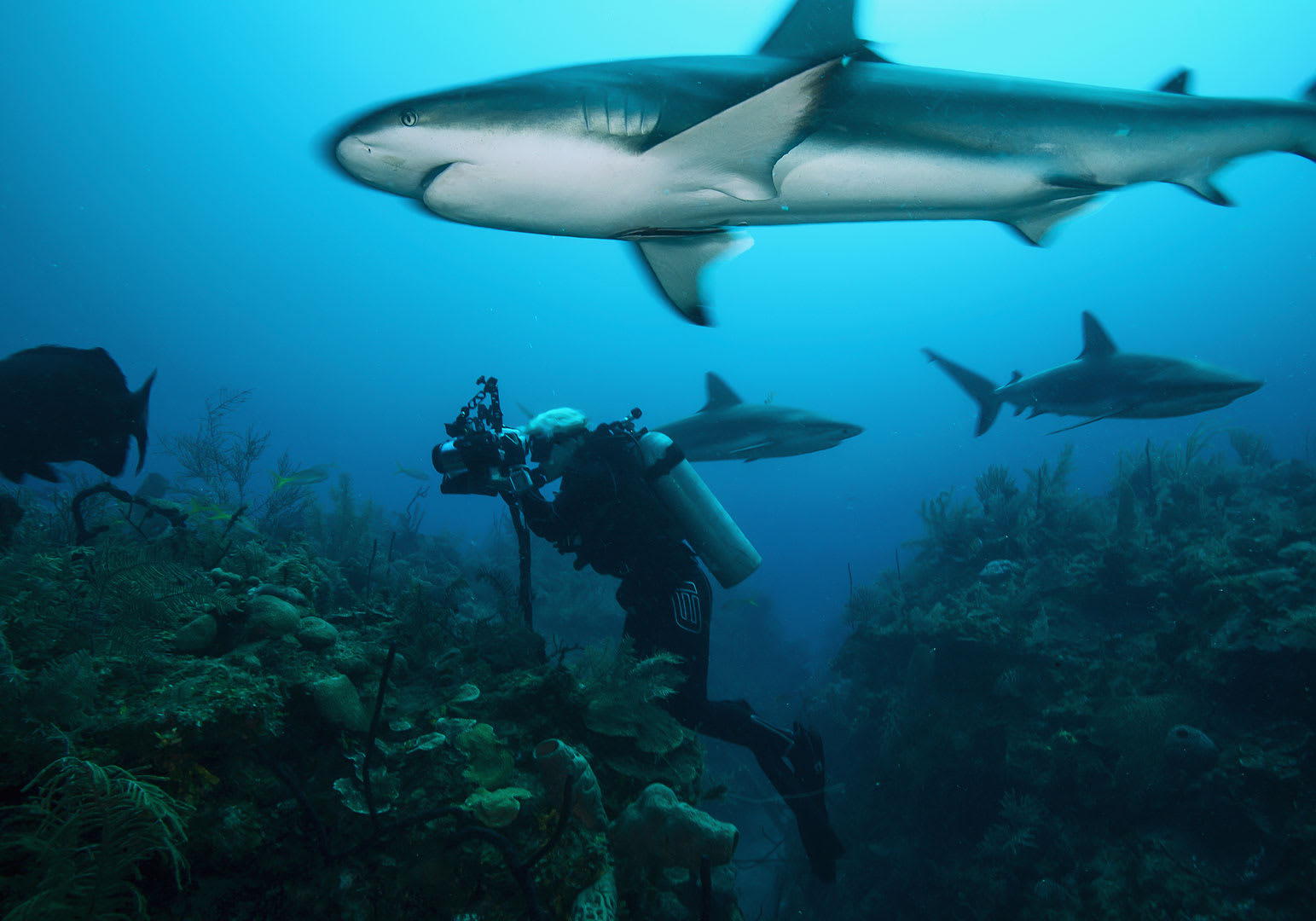
- 9 a.m. Cuba. Photographer Jennifer Hayes joins Caribbean reef sharks patrolling the Gardens of the Queen in Cuba. The species is listed as near threatened, but the population remains stable at this national park. Outside the sanctuary, reef shark numbers are in decline in the waters off Belize and Cuba as a result of illegal overfishing. The United States prohibits commercial fishing of these animals, allowing them to recover. PHOTOGRAPH BY DAVID DOUBILET, NATIONAL GEOGRAPHIC CREATIVE.
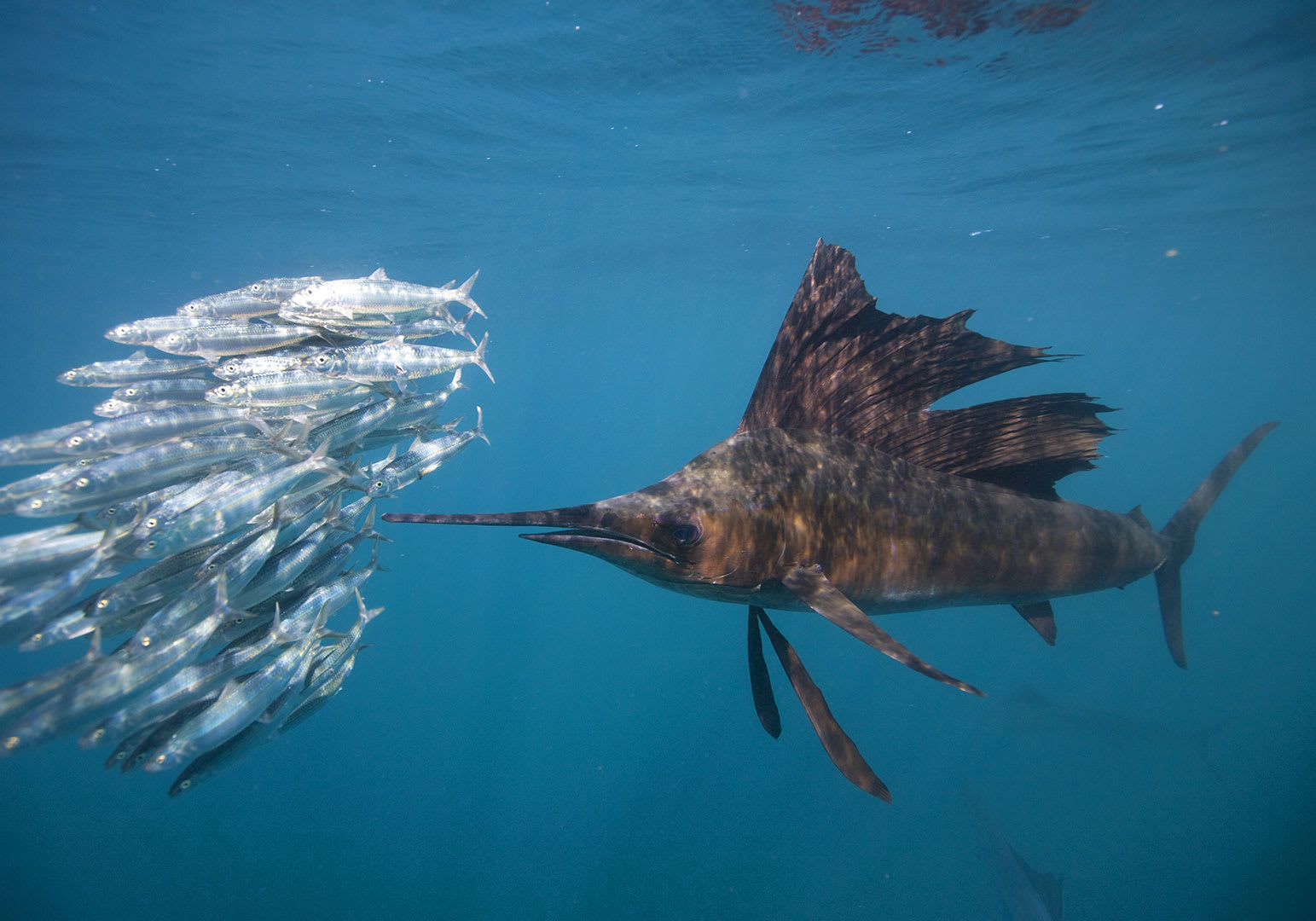
- 10 a.m. Isla Mujeres. A scheming sailfish lurks behind a cluster of unsuspecting silvery sardines, waiting to strike near Mexico's Isla Mujeres in the Caribbean Sea. The hunting fish rolls out its billowing dorsal fin, which stabilizes its head and makes its rapier-like bill less detectable, when it's getting ready for an attack. The spirited swimmer is a favorite among trophy fishers. PHOTOGRAPH BY PAUL NICKLEN, NATIONAL GEOGRAPHIC CREATIVE.
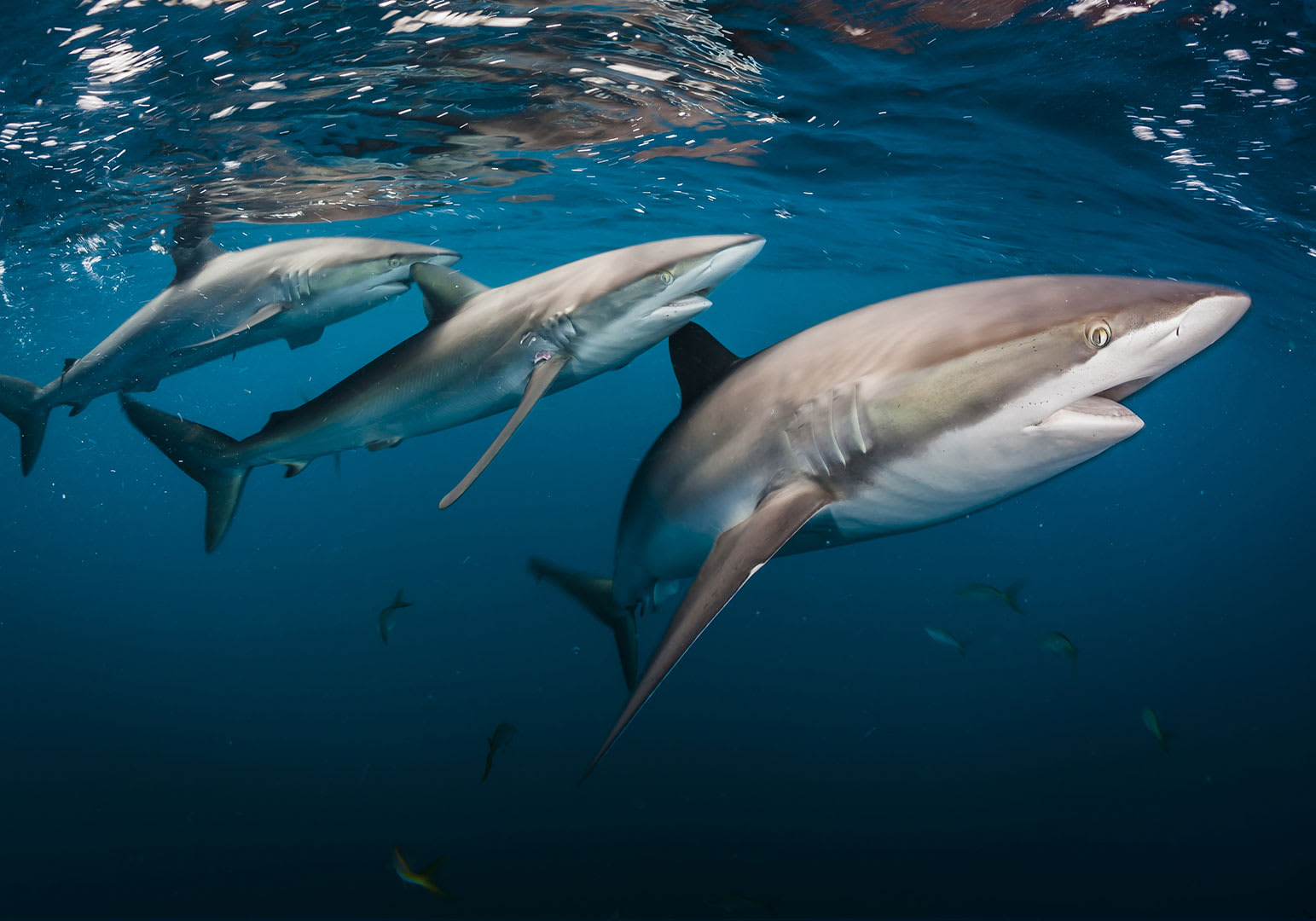
- 11 a.m. Cuba. A trio of sleek ridgeback sharks patrols the rich coral reefs of Gardens of the Queen in Cuba. Beyond the marine sanctuary, these sharks are valued for their fins and are often caught as bycatch for tuna fisheries. They're listed as near threatened and vulnerable in different parts of the Pacific and Atlantic oceans, where conservation programs are being rolled out. PHOTOGRAPH BY DAVID DOUBILET AND JENNIFER HAYES, NATIONAL GEOGRAPHIC CREATIVE.
National Geographic produced this content as part of our partnership with Rolex, formed to promote exploration and conservation. The organizations have joined forces in efforts that support explorers who are nurturing big ideas and finding real solutions to protect Earth’s wonders.